

Facing the end of a pet’s life is one of the hardest things many pet owners will do. Knowing what to expect during in‑home euthanasia helps the process feel calmer for everyone involved. This article explains the emotional support available during at‑home euthanasia—how it brings comfort to pets and people, what compassionate care looks like, and simple steps you can take to prepare. Because grief and anxiety are common, we focus on practical, gentle guidance you can use in the days leading up to and after the visit.
How Emotional Support Improves the In-Home Euthanasia Experience
Emotional support makes a big difference during in‑home euthanasia by helping owners feel safe and centered while their pet is at ease. Gentle, steady care lowers anxiety, creates a quiet atmosphere, and lets families focus on saying goodbye. A compassionate caregiver can guide you through each step so the final moments are respectful, calm, and focused on your pet’s comfort.
Key Parts of Compassionate Euthanasia Care
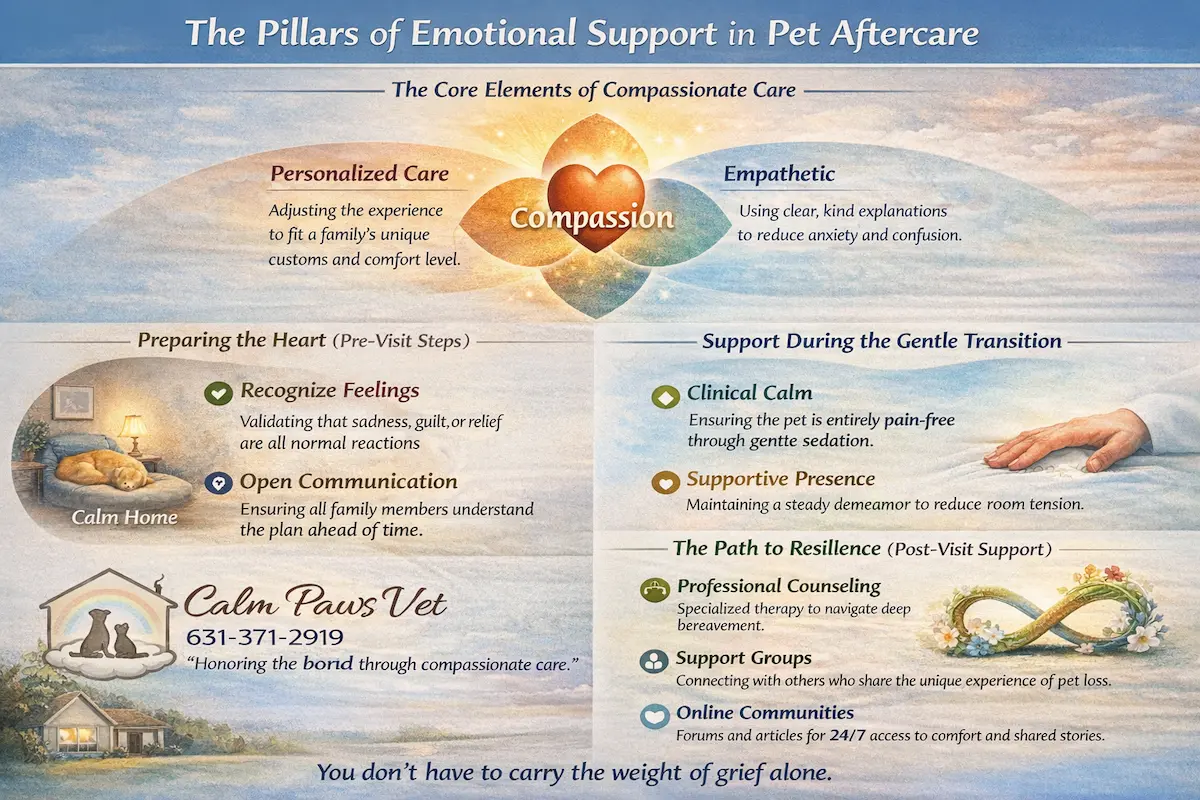
Compassionate euthanasia centers on practices that support both the pet and the family emotionally. Core elements include:
- Personalized Care: Adapting the process to the family’s needs, customs, and comfort level.
- Empathetic Communication: Clear, kind explanations so you know what will happen and why.
- Support Tailored to Emotional Needs: Practical resources and guidance to meet the feelings you’re experiencing.
Calm Paws Vet specializes in compassionate in‑home euthanasia and end‑of‑life care, with emotional support built into every visit.
| Service | Description | Benefit |
|---|---|---|
| Personalized Care | Adjusting care to fit each family’s emotional and practical needs | Makes the experience feel more comfortable and respectful |
| Empathetic Communication | Clear, compassionate explanations and answers to your questions | Reduces confusion and lowers anxiety |
| Emotional Resources | Access to grief support, counseling referrals, and coping tools | Helps families process loss and begin healing |
This table shows how different aspects of emotional care come together to create a more compassionate, dignified euthanasia experience.
How Emotional Care Is Personalized During the Procedure
Care teams tailor emotional support by listening to your concerns and adapting their approach. They assess how you and your family are coping, offer reassurance about the process, and honor your wishes for how the final moments should look. Whether you want quiet privacy, guided explanation, or gentle reassurance throughout, the team works to create a peaceful setting for your pet and your family.
How to Prepare Emotionally for In-Home Euthanasia
Preparing emotionally can ease some of the stress when the day arrives. Helpful steps include:
- Recognizing Feelings: Give yourself permission to feel sadness, guilt, relief, or numbness—these are normal reactions.
- Seeking Support: Talk with friends, family, or a counselor so you don’t carry it alone.
- Planning for the Process: Discuss the timeline, location, and any special wishes with your veterinarian ahead of time.
Taking these steps can help you feel more grounded and present for your pet during their final moments.
Steps Families Can Take Before Euthanasia to Cope
There are practical things families can do in the days before euthanasia to reduce stress and create comfort:
- Open Communication: Share your thoughts and concerns with family members so everyone understands the plan.
- Creating a Supportive Environment: Make the home calm—soft lighting, favorite bedding, and familiar smells can soothe your pet.
- Utilizing Available Resources: Reach out to grief counselors or local support groups for guidance before and after the visit.
These measures can make the time leading up to euthanasia more manageable and meaningful.
How Understanding the Procedure Reduces Anxiety
Knowing the steps of the euthanasia process helps remove uncertainty. When you understand what will happen, who will be there, and how your pet will be kept comfortable, it’s easier to focus on being present rather than worrying about logistics. Clear explanations from your veterinarian give you control over decisions and peace of mind during a difficult time.
What to Expect from Emotional Support During Euthanasia
During the visit, caregivers offer several types of support to help families through the process:
- Types of Support Offered: Gentle reassurance, practical guidance, and quiet companionship as you say goodbye.
- Veterinary Involvement: The veterinarian explains each step, answers questions, and ensures your pet is pain‑free and calm.
- Family Participation: Families are encouraged to be present in whatever way feels right—holding, talking, or simply sitting nearby.
This combined support helps ensure families feel cared for and understood when it matters most.
How Veterinarians Provide Comfort and Guidance During the Procedure
Veterinarians use a mix of clinical skill and emotional care to guide families through euthanasia. Common approaches include:
- Empathetic Communication: Honest, gentle conversations about what to expect and why certain steps are taken.
- Reassurance: Clear explanations to ease fears and confirm your pet’s comfort.
- Supportive Presence: A calm, steady demeanor that helps reduce tension in the room.
These methods help people feel safe and supported while focusing on their connection with their pet.
Common Emotional Responses and How They’re Addressed
People often feel a mix of grief, guilt, relief, or disbelief after euthanasia. Care teams are prepared to recognize and respond to these reactions by:
- Understanding Grief: Normalizing grief and explaining common reactions.
- Support Strategies: Referring to grief counseling, support groups, or reading materials.
- Encouraging Expression of Feelings: Allowing space for sharing memories and emotions without judgment.
These supports help families process their feelings in healthy ways.
Support Options for Grieving Pet Owners After Euthanasia
After the visit, there are several emotional supports available to help you through grief:
- Counseling Services: Professional help to talk through emotions and loss.
- Support Groups: Spaces to connect with others who understand pet loss.
- Online Resources: Articles, forums, and guides that offer practical and emotional support.
Using these resources can make the weeks and months after euthanasia easier to navigate.
Resources That Help with Coping and Grief Counseling
Common resources for grieving pet owners include:
- Books and Articles: Thoughtful reading about pet loss and healing.
- Websites: Trusted online sources that offer advice and community.
- Local Support Services: In‑person counseling and community groups for one‑on‑one or group support.
Finding the right combination of resources can support your healing in a way that fits you.
How Ongoing Emotional Care Helps After Euthanasia
Continued emotional care supports recovery in several ways:
- Long-Term Emotional Health: Ongoing support helps you adjust and cope as time passes.
- Continued Support: Follow‑ups, referrals, and check‑ins ensure you aren’t left alone in grief.
- Building Resilience: Learning coping tools to manage future losses or hard moments.
Prioritizing ongoing care helps you move forward at your own pace and find ways to remember your pet with love.
For more information about compassionate care during this difficult time, visit Calm Paws Vet.
Frequently Asked Questions
What emotional support can I expect during in-home pet euthanasia?
You can expect gentle, compassionate caregivers who offer emotional reassurance, clear guidance, and quiet companionship to help create a peaceful setting for you and your pet.
How do veterinarians help ease anxiety during the euthanasia process?
Veterinarians use calm, honest communication, explain each step, and stay present and steady—helping reduce fear and keep your pet comfortable.
What are common emotional reactions to pet euthanasia?
Common reactions include deep sadness, guilt, relief, or numbness. Caregivers can point you to counseling and emotional support groups and encourage open sharing of feelings.
How can I prepare emotionally for my pet’s euthanasia at home?
Prepare by acknowledging your emotions, talking with loved ones or a counselor, and discussing the procedure and your wishes with the veterinarian so you feel informed and supported.
What support is available after my pet’s euthanasia?
After euthanasia, you can access counseling services, in‑person or online emotional support groups, and educational resources to help you process grief and begin healing.