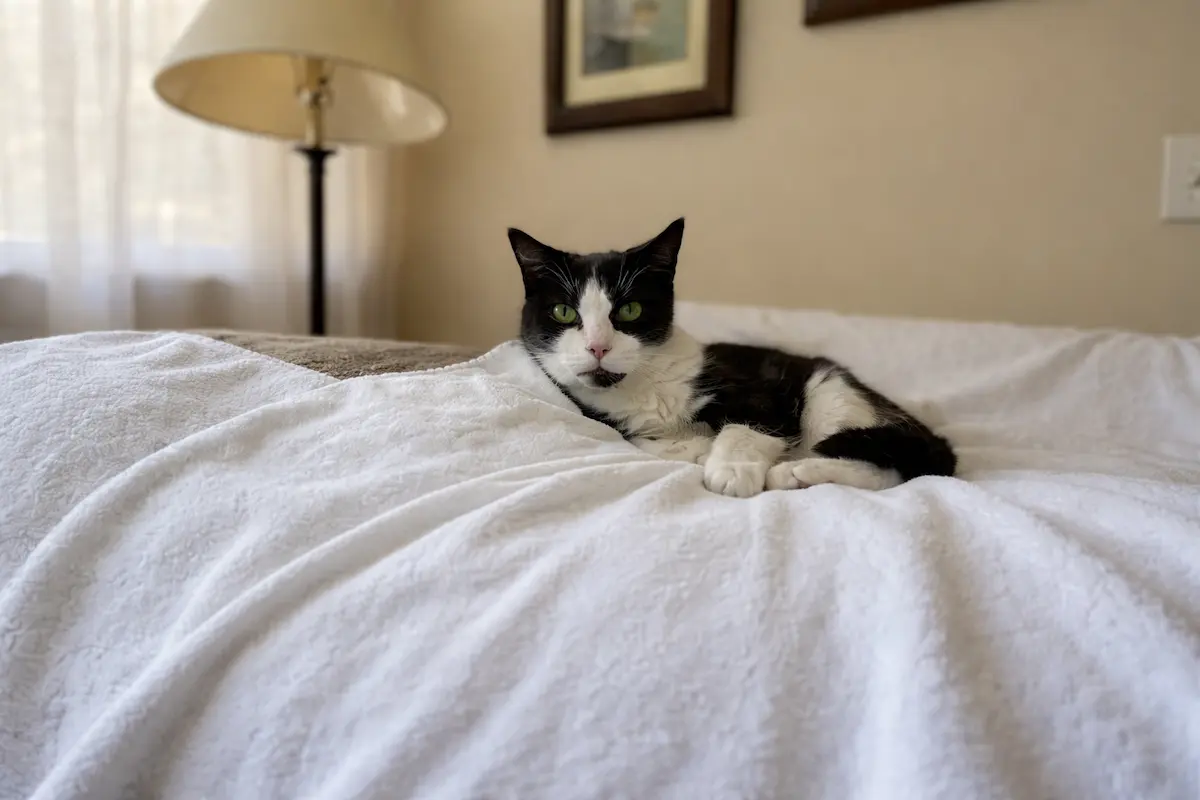
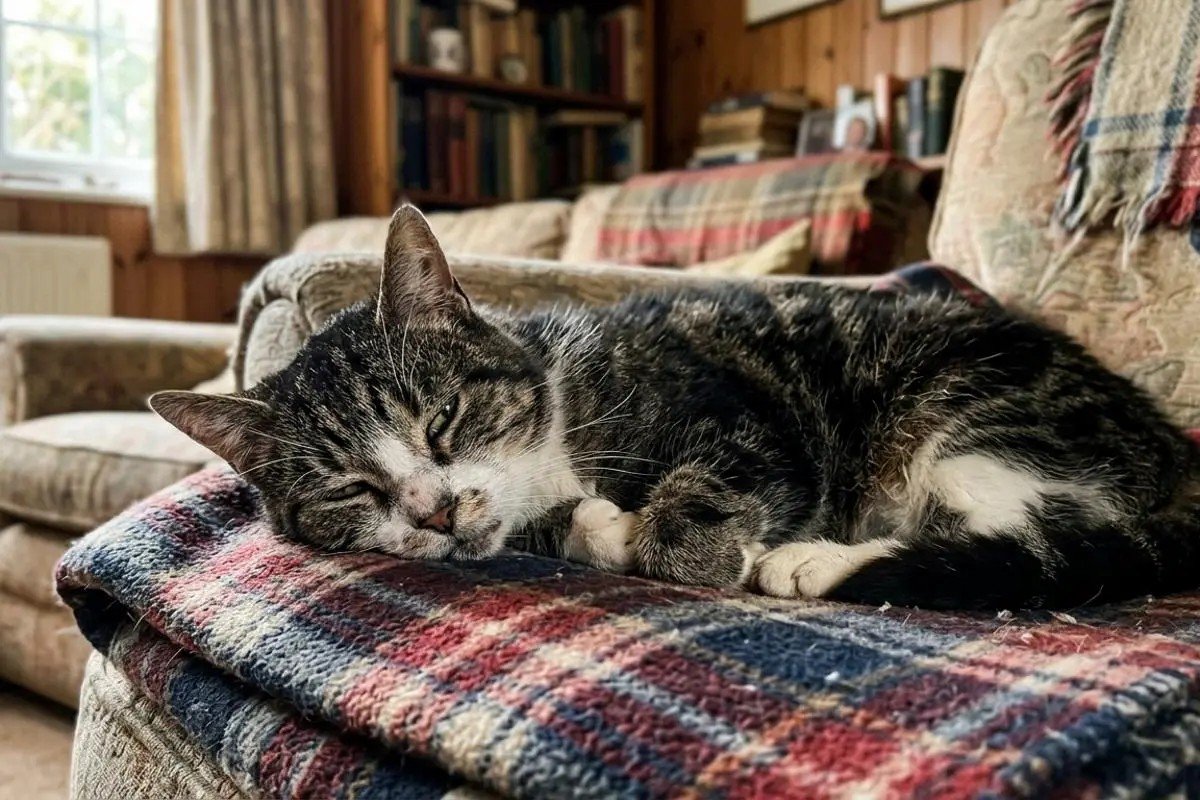
The most important thing is that your pet can remain somewhere familiar and comfortable while your family has the privacy to be together.
A little preparation can make the practical parts of the visit easier, but nothing on this list is meant to become another responsibility on an already difficult day.
A favorite blanket, a comfortable place to rest, the people your pet trusts, and a clear aftercare plan are often more than enough.
Your home does not need to look a certain way.You do not need to clean for the veterinarian, rearrange an entire room, buy special supplies, prepare a ceremony, or make everyone in the family respond the same way.
Prepare only what makes the day easier for your pet and your family.
Choose the Place Where Your Pet Is Most Comfortable
The appointment does not have to happen at a table or in a specially prepared room. A favorite dog bed, couch, blanket, quiet bedroom, living-room rug, porch, or another familiar place may work well.
If your pet is weak or has already settled into a comfortable location, avoid moving them simply to create a more convenient setup unless movement is necessary for safety or veterinary access.
If you are unsure about the location:
Show Dr. Jake where your pet is resting when he arrives. The safest and most comfortable setup can be decided together.
2
Add a Soft, Practical Layer Under Your Pet
A favorite blanket, washable throw, towel, or soft bedding can help your pet remain comfortable.
If possible, place an absorbent pad, towel, or waterproof layer underneath. After death, the bladder or bowels may release as the body’s muscles relax. This is a natural physical change and does not by itself indicate suffering.
You do not need a special veterinary pad:
Use something you already have and are comfortable potentially washing or discarding afterward.
3
Make the Area Easy to Reach
You do not need to clear the entire room, but make sure Dr. Jake can safely reach your pet and has enough space to sit or kneel nearby and work with the medications.
If your pet is under a very low bed, deep behind furniture, or somewhere that would make safe veterinary access difficult, call beforehand and ask whether a small adjustment would be helpful.
4
Make Parking and the Entrance Simple
If possible, leave an accessible parking space near the entrance to your home and make sure the path to the door is clear.
This is especially helpful if Calm Paws Vet will be coordinating aftercare and respectfully transporting your pet after the appointment.
Decide Who Your Family Wants Present
AAHA end-of-life guidance supports allowing families to comfort their pets during euthanasia while also respecting people who prefer not to be present. There is no required number of people and no single correct way to participate.
Adults
Some families want everyone together. Others prefer one or two people in the room. A family member can also say goodbye beforehand and step away if remaining for the medical portion feels too difficult.
Children
Children can be included when their family feels it is appropriate. Prepare them honestly using age-appropriate language, answer questions, and give them permission to decide whether they want to remain present.
Our
guide to talking with children about pet death
can help you prepare.
Other Pets Can Be Nearby When It Is Comfortable and Safe
Calm household pets may remain nearby during some or all of the visit if their presence is not stressful for the pet receiving care and does not interfere with the veterinary procedure.
If another dog is protective, highly anxious around visitors, very excited, or likely to crowd the medical area, giving that pet another comfortable room during the procedure may be easier for everyone.
Some families choose to allow another pet to see or sniff their companion after death. That is optional. Research has not shown that viewing the body prevents later searching or other grief-related behavioral changes.
If you do allow it, let the surviving pet approach voluntarily. There is no need to force an interaction.
Keep the Setting Familiar Rather Than Perfect
You can make small adjustments if they help your pet settle, but there is no required lighting, music, ceremony, or room setup.
Lighting
Use whatever lighting is comfortable for your pet and family. Soft natural light or lamps may feel calmer than very bright overhead lighting.
Sound
Turn down televisions or other distracting noise if that helps. Silence is completely fine. Familiar quiet music is also fine if your family prefers it.
Temperature
Keep the room at a comfortable temperature, especially for a weak pet who may have difficulty moving away from an area that is too warm or cold.
Favorite Things
A familiar blanket, bed, toy, pillow, or other item can stay beside your pet if it brings comfort.
Food Is Optional
If your pet is alert, interested in food, able to swallow normally, and has not been given instructions that restrict eating, a small familiar treat can be part of the time you spend together before sedation.
There is no need to prepare a special “last meal,” and you should not pressure a pet who is nauseated, weak, uninterested in food, or having difficulty swallowing.
If you are unsure whether food is appropriate because of your pet’s medical condition, ask Dr. Jake beforehand.
Review Aftercare Before the Appointment When You Can
Choosing what will happen after your pet passes can feel much harder when you are making the decision in the middle of the goodbye.
Whenever possible, review the basic options beforehand so the plan is already understood.
Private Cremation
Your pet is cremated alone and the cremated remains are returned to your family.
Communal Cremation
Your pet is cremated respectfully alongside other pets and individual ashes are not returned.
Current keepsakes, cremation details, ash-return information, and pricing are maintained on the dedicated
Calm Paws Vet Aftercare page
.
Small Things That Can Make the Day Easier
Put Phones on Quiet
Consider silencing nonessential notifications so calls and alerts do not interrupt the time with your pet.
Let Important People Know
If a relative or close friend would want an opportunity to say goodbye or be available afterward, telling them ahead of time can reduce last-minute decisions.
Keep Necessary Information Nearby
If Dr. Jake requested records, medication information, or other details before the visit, having them available can make the beginning of the appointment easier.
Leave Space Afterward If You Can
If your schedule allows it, keeping the hours after the appointment relatively open may give your family privacy and time to process the loss without immediately moving into other obligations.
You Can Leave Some Things Undone
You Do Not Need to Clean the House
The purpose of the visit is caring for your pet and family, not evaluating your home.
You Do Not Need a Ceremony
Candles, music, readings, flowers, or rituals are optional. A quiet room and your presence are enough.
You Do Not Need to Be Composed
Crying, needing silence, asking repeated questions, or having difficulty finding words are all understandable during an emotional appointment.
You Do Not Need to Force Food or Activity
A sick pet does not need a special walk, meal, or experience if they no longer feel well enough to enjoy it.
You Do Not Need Everyone to Stay
A person can say goodbye and step away if they do not want to be present for the medical portion of the appointment.
You Do Not Need Every Decision Today
Aftercare should be planned when possible, but many memorial choices can wait until your family is ready.
What Happens on the Day of the Visit?
The exact length and pace vary by pet and family. Dr. Jake begins with conversation and makes sure you understand what will happen before medications are given.
Questions First
There is time to discuss your pet, the plan, family involvement, and aftercare before proceeding.
Sedation First
A pre-euthanasia sedative is given so your pet can become deeply relaxed and fall asleep before the final medication.
Time Afterward
After Dr. Jake confirms that your pet has passed, your family can have quiet time together before moving forward with the aftercare plan.
For the complete medical process, visit the
What to Expect During an In-Home Pet Euthanasia Visit
page.
Preparing for an In-Home Pet Euthanasia Appointment
Do I need to move my pet before the appointment?
Not necessarily. If your pet is already resting comfortably somewhere that can be safely accessed, there may be no reason to move them.
If you are unsure whether the location will work, tell Dr. Jake where your pet is when he arrives and the setup can be adjusted if necessary.
Can the appointment happen outside?
An outdoor appointment may be possible when the location is safe, private enough for your family, accessible for the veterinary procedure, and comfortable for your pet.
Weather, temperature, lighting, insects, terrain, neighborhood activity, and your pet’s mobility all matter. If you would prefer a porch, deck, patio, or yard, discuss the location with Dr. Jake.
Should children be present?
That is a family decision. Some children want to stay with their pet, while others prefer to say goodbye beforehand or enter again afterward.
Preparing children with honest, age-appropriate information and allowing them to ask questions can help them understand what is happening.
Should my other pets be in the room?
Calm household pets may be present when their presence does not create stress or interfere with the procedure.
There is no requirement that another pet view the euthanasia or the body afterward, and research has not demonstrated that doing so prevents later grief-related behavioral changes.
Can I hold my pet?
Families can usually remain close, touch, speak to, comfort, or hold their pet when it is safe and practical for the medical procedure.
AAHA end-of-life guidance supports offering families the opportunity to comfort their pet while also respecting anyone who prefers not to hold or remain present.
Should I give my pet a special last meal?
You do not need to. If your pet is alert, interested, able to swallow normally, and has no veterinary restriction on food, a favorite safe treat can be offered before sedation.
Do not pressure a pet who does not want food. Appetite loss can be part of serious illness, and comfort is more important than creating a particular final meal.
What if I cry through the appointment?
You do not need to hide your emotions or apologize for them. This is a significant goodbye, and people respond to it in many different ways.
Do I have to decide on cremation beforehand?
It is helpful to discuss the main aftercare choice beforehand when possible because it reduces decisions immediately after your pet has passed.
You can review private and communal cremation options on the Calm Paws Vet Aftercare page or ask Dr. Jake questions before making the decision.
You Can Ask About the Setup Before Appointment Day
If you are unsure where your pet should rest, whether children or another pet should be present, what to have ready, or how aftercare will work, you can ask Dr. Jake before the appointment.
Calm Paws Vet serves families throughout Suffolk County and Long Island’s North Shore. In the Three Village and Setauket area, in-home visits are scheduled for weekday evenings and weekends, with daytime weekday visits available for families further out on Long Island.
More Help Before the Appointment
What to Expect
Understand the complete sedation-first process from Dr. Jake’s arrival through family time and aftercare.
Aftercare Options
Review current private and communal cremation choices, keepsakes, transportation, and ash-return information.
Talking to Children About Pet Death
Age-appropriate guidance for preparing children and helping them understand a pet’s death.
Frequently Asked Questions
Answers about timing, service area, the visit, aftercare, and end-of-life support.
You Do Not Need to Prepare a Perfect Goodbye
Choose a place where your pet feels safe, keep the people and things that matter nearby, and let Dr. Jake guide the medical portion of the visit. Everything else can remain simple.