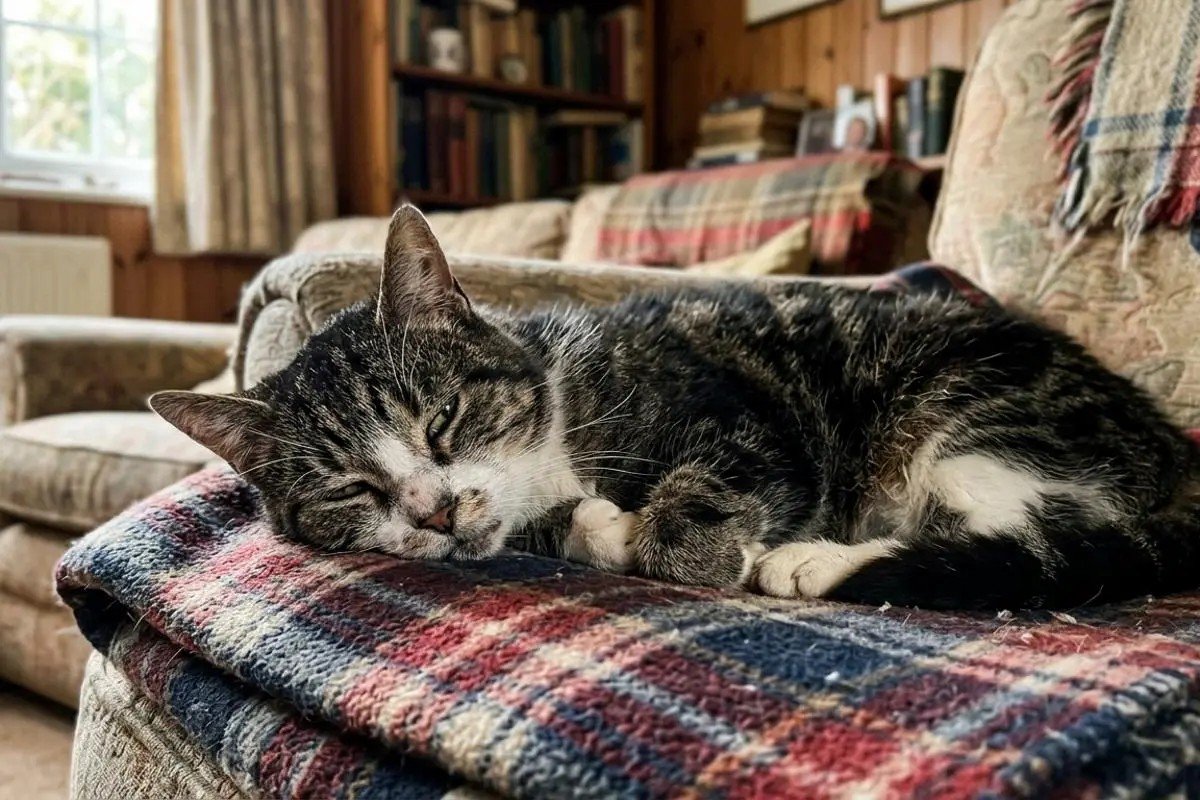
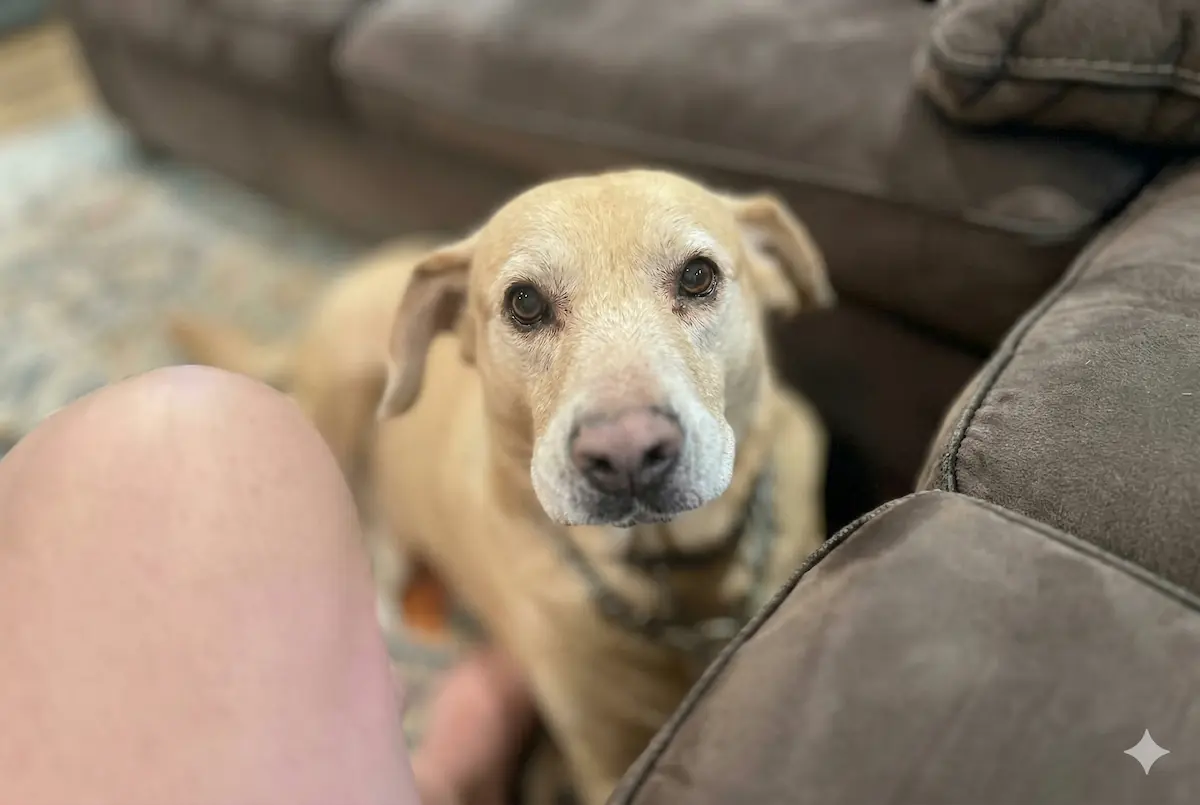
Navigating in-home pet euthanasia often begins long before the veterinarian comes to your door.
It may begin with a change in appetite, mobility, breathing, sleep, or interest in family life. Then come questions about whether more treatment may help, whether hospice is appropriate, when to schedule, what happens during the visit, and what your family will need afterward.
There is rarely one moment when every question suddenly disappears.
This guide follows the whole journey from uncertainty through the appointment and the days after a goodbye, with links to more detailed Calm Paws Vet resources when you need them.
Four Parts of Navigating an In-Home Goodbye
Families often assume they should wait until they are completely sure that euthanasia is the right choice before contacting a veterinarian.
In reality, asking questions can be part of deciding. A discussion may lead to hospice, a change in symptom management, more monitoring, or planning an in-home goodbye.
Start With Quality of Life, Not the Calendar
The question is usually not whether your pet has a particular diagnosis. The more useful question is whether your pet can still experience enough comfort, function, connection, and meaningful parts of daily life.
AAHA recommends looking at the overall pattern rather than relying on one symptom.
Ask Whether Hospice or Palliative Care Can Still Help
A terminal or progressive diagnosis does not automatically mean euthanasia has to happen immediately.
Hospice and palliative care focus on reducing suffering and supporting meaningful comfort when curing the underlying disease is no longer possible or is no longer the family's goal.
Depending on the individual pet, the plan may include symptom management, environmental changes, mobility assistance, nutritional support, daily monitoring, and a crisis plan.
The important question is whether supportive care is still providing enough benefit to maintain an acceptable quality of life.
Four Things to Discuss Before Appointment Day
Your Pet's Current Condition
Explain what has changed, the diagnosis if known, current medications, mobility concerns, anxiety, and anything else that may affect the visit.
Who Will Be Present
Decide which family members want to participate and whether children or other household pets may be nearby.
Where Your Pet Will Be Comfortable
A familiar bed, blanket, couch, quiet room, porch, or another accessible resting place may all be appropriate.
Aftercare
Discussing private cremation, communal cremation, or your own appropriate arrangements beforehand means fewer practical decisions immediately after your pet has passed.
You Do Not Need to Create a Perfect Setting
The home does not need to be spotless or arranged like a veterinary clinic. The priority is creating safe access to your pet and allowing them to remain somewhere familiar.
Calm Paws Vet Uses a Sedation-First Process
Dr. Jake explains the plan before medications are given. A pre-euthanasia sedative is administered first so your pet can become deeply relaxed and fall asleep before the final medication.
The exact response to sedation varies between pets. With the current Calm Paws Vet protocol, deep sedation commonly develops over approximately 5 to 15 minutes, but Dr. Jake assesses the individual pet rather than relying only on a timer.
There Is No Single Correct Way to Be Present
The Next Step Does Not Have to Happen Immediately
After Dr. Jake confirms that your pet has passed, your family can have quiet time together before proceeding with aftercare.
Current cremation packages, keepsakes, transportation, pricing, and return information are maintained on the dedicated Calm Paws Vet Aftercare page.
Grief Does Not End When the Appointment Does
The practical part of euthanasia may be finished in one visit, but grief follows its own timeline.
Some people feel intense sadness immediately. Others initially feel numb, exhausted, or relieved that their pet is no longer struggling. Grief can also come in waves after familiar routines change.
The Association for Pet Loss and Bereavement provides pet-loss support resources and information for grieving families.
If your pet develops severe breathing difficulty, uncontrolled seizures, repeated collapse, significant uncontrolled bleeding, severe uncontrolled pain, or another acute medical emergency, contact your primary veterinarian or the nearest emergency veterinary hospital.
Calm Paws Vet focuses on hospice and scheduled in-home euthanasia care.
Navigating In-Home Pet Euthanasia
How do I know when to schedule in-home pet euthanasia?
There is rarely one single sign that determines the timing for every pet. Look at the overall pattern of comfort, appetite, hydration, breathing, mobility, hygiene, interaction, treatment response, and good versus difficult days.
A veterinarian can help you understand what may still be treatable and whether reasonable comfort can still be maintained.
Do I need to be completely certain before contacting Calm Paws Vet?
No. You can ask questions about quality of life, hospice, the appointment, scheduling, or aftercare before making a final decision.
What should I prepare before an in-home euthanasia visit?
Very little is required. Choose a comfortable and accessible place for your pet, decide who would like to be present, and review aftercare beforehand when possible.
You do not need to clean the house, create a ceremony, or build a special veterinary setup.
Will my pet be sedated first?
Yes. Calm Paws Vet uses a sedation-first process. A pre-euthanasia sedative is given so your pet can become deeply relaxed and asleep before the final medication is administered.
Can children be present?
Yes, when the family feels that participation is appropriate for the child. Some children want to remain beside their pet, while others prefer to say goodbye beforehand or return afterward.
Can our other pets be present?
Other pets are welcome if well behaved and matching the calm energy in the room.
How long does an in-home euthanasia visit take?
Many Calm Paws Vet visits are completed in around 30 minutes, but every pet and family is different. Medication response, questions, the medical process, and family time can affect the overall length of the visit.
What happens after my pet passes?
Dr. Jake confirms that your pet has passed and your family can have quiet time together. When you are ready, the aftercare plan discussed beforehand can move forward.
When are appointments available in the Setauket area?
In the Three Village and Setauket area, appointments are scheduled for weekday evenings and weekends. Daytime weekday visits are available for families in the outer service area.
Sources and Further Reading
You Can Start With a Conversation
If you are still trying to understand whether hospice, additional treatment, or euthanasia is the right next step, you can contact Dr. Jake with questions before scheduling.
I care for families across Suffolk County and Long Island's North Shore. In the Three Village and Setauket area, in-home visits are scheduled for weekday evenings and weekends, with daytime weekday visits available for families further out on Long Island.
Guidance for Each Part of the Journey
Start With the Question That Is in Front of You Today
Maybe the question is whether your pet is still comfortable. Maybe it is how an in-home appointment works. Maybe you are ready to talk about scheduling. Whatever stage you are in, you can begin there.