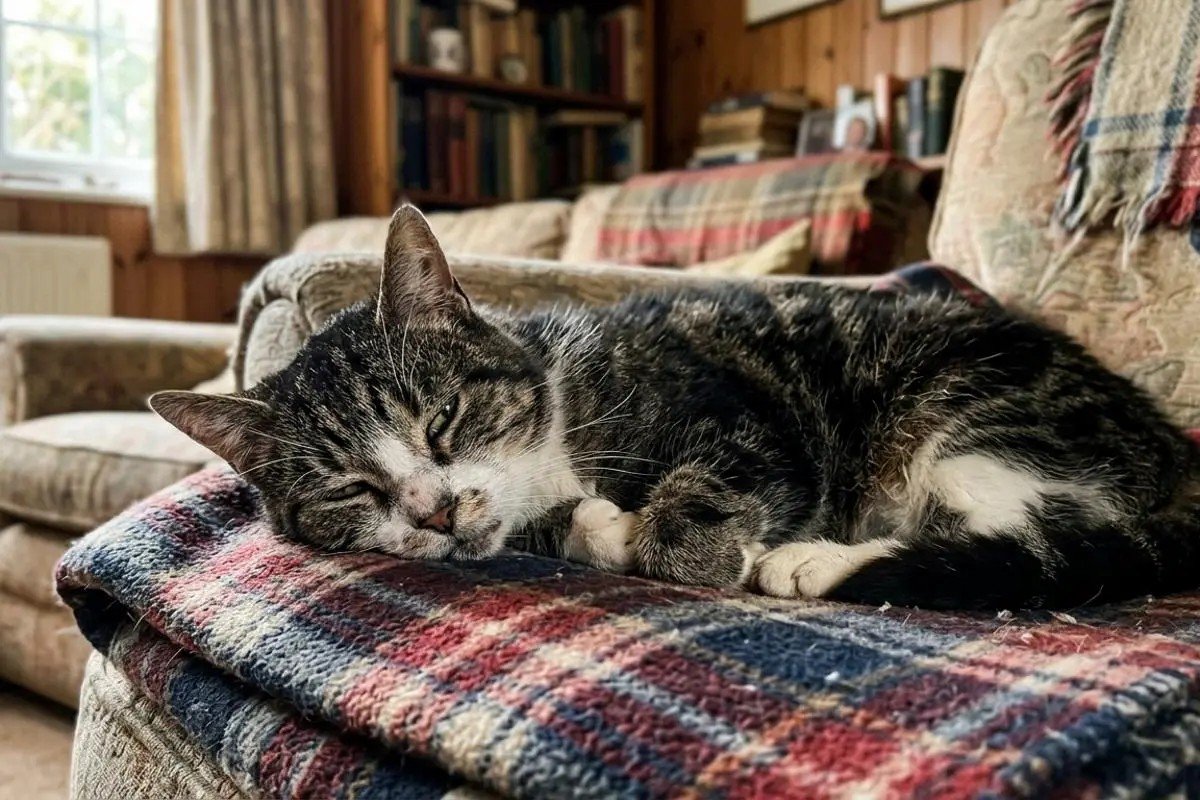

When a pet is living with advanced illness or age-related decline, one of the hardest questions is also one of the simplest: “How do I know if my pet is still comfortable?”
The HHHHHMM Quality of Life Scale gives families a structured way to look at seven important parts of daily life: Hurt, Hunger, Hydration, Hygiene, Happiness, Mobility, and More Good Days Than Bad.
It cannot make an end-of-life decision for you. What it can do is help you notice patterns, track changes over time, and have a more specific conversation with your veterinarian about your pet’s comfort.
Where the HHHHHMM Scale Comes From
The HHHHHMM Quality of Life Scale was developed by veterinary oncologist Dr. Alice Villalobos as a way to help families and veterinary teams evaluate quality of life during palliative and hospice care.
The scale uses seven categories. Each is scored from 1 to 10, with 10 representing the best status in that category. The maximum possible total is 70.
You can read veterinary overviews of the scale through VCA Animal Hospitals and the American Animal Hospital Association.
Most important: a quality-of-life score is a tool, not a diagnosis and not an automatic instruction to euthanize.
AAHA specifically recommends using quality-of-life scales to support, rather than replace, conversations with your veterinarian.
How the Scoring Works
Give your pet a score from 1 to 10 in each of the seven categories. Try to score what you actually observed rather than what you hope the day looked like.
Consistency matters more than creating a perfect number. Use the same questions each time so you can see whether the trend is stable, improving, or declining.
Hurt
Hurt looks at pain and physical distress. Ask whether your pet can rest comfortably and whether current veterinary treatment is adequately controlling symptoms.
Pain does not always look like crying or vocalizing. Dogs and cats may show discomfort through changes in posture, movement, breathing, sleep, interaction, or willingness to be touched.
- Restlessness or repeated position changes.
- Panting when the room is not hot.
- Trembling or unusual posture.
- Reluctance to stand, walk, or be touched.
- Hiding or withdrawing more than usual.
- Difficulty resting comfortably.
- New or worsening breathing difficulty.
Hunger
Hunger considers whether your pet wants to eat and can eat comfortably. Look at the pattern rather than one favorite treat or one unusually good meal.
A pet who is eating normally is different from a pet who eats only when repeatedly encouraged or accepts a few special foods while refusing normal meals.
- Is my pet interested in food?
- Are normal meals being eaten?
- Does eating appear comfortable?
- Is food being refused more often?
- Does my pet approach food and then turn away?
- Has appetite changed significantly from their normal pattern?
Appetite can change for many reasons, including nausea, pain, medication effects, dental problems, or disease progression. Your veterinarian can help determine whether a new change may be treatable.
Hydration
Hydration looks at whether your pet is drinking enough and whether illness is making it difficult to maintain an appropriate fluid balance.
Increased thirst does not necessarily mean hydration is adequate. Some medical conditions cause pets to drink more while still having problems maintaining hydration.
- Drinking much less or much more than usual.
- Repeated vomiting or diarrhea.
- Difficulty reaching the water bowl.
- Weakness or lethargy occurring with other signs of illness.
- A sudden change from your pet’s normal drinking pattern.
If you are concerned about dehydration, vomiting, diarrhea, or a major change in thirst, contact your veterinarian. Hydration cannot be reliably assessed from a quality-of-life worksheet alone.
Hygiene
Hygiene considers whether your pet can remain reasonably clean, dry, and comfortable with an appropriate amount of help.
A mobility-limited pet may need more assistance without necessarily having a poor quality of life. What matters is whether those needs can still be managed in a way that keeps the pet comfortable.
- Can your pet toilet without substantial distress?
- Can they move away from urine or stool?
- Are accidents becoming more frequent?
- Can your cat still groom normally?
- Is fur becoming soiled or matted?
- Are skin irritation or sores developing?
Happiness
Happiness is personal because every pet enjoys different things. The goal is not to compare your older pet with how they behaved when they were young. Instead, compare them with their own recent normal.
A quiet senior pet may still have meaningful quality of life if they enjoy affection, family, favorite resting places, food, time outside, watching the yard, or other familiar routines.
- Do they still respond to you?
- Do they seek affection or companionship?
- Do favorite routines still matter?
- Do they show interest in their surroundings?
- Are there still moments of comfort, curiosity, or connection?
Mobility
Mobility is not about whether your pet can run or climb like they once did. Ask whether they can move well enough, independently or with reasonable assistance, to meet their basic daily needs without significant distress.
- Rise from bed.
- Reach food and water.
- Go outside or reach the litter box.
- Change sleeping positions.
- Move without repeated falls.
- Rest again after moving.
Non-slip rugs, easier litter-box access, ramps, changes to furniture, and veterinarian-recommended mobility aids may sometimes preserve comfort and independence.
More Good Days Than Bad
This final category asks you to step back from individual symptoms and look at the overall pattern.
A good day does not need to look like your pet’s younger years. It can simply mean they were comfortable, could rest, connected with you, and still experienced something meaningful or enjoyable.
A difficult day may include persistent pain, nausea, breathing problems, anxiety, inability to settle, mobility problems, repeated accidents that cause distress, or very little meaningful engagement.
Use a calendar.
Mark each day as comfortable, difficult, or mixed. Seeing several weeks on paper can reveal a change that is hard to recognize when you are living through it one day at a time.
What Does the Total Score Mean?
Add the seven category scores for a possible total between 7 and 70.
In published veterinary explanations of the Villalobos scale, a score above 5 in each category or an overall total greater than 35 is described as suggesting an acceptable quality of life and that continued end-of-life care may be reasonable.
That does not mean 35 is a pass or fail line. A pet with a total above 35 can still have a serious problem in one important area. A pet whose score has dropped should not automatically be scheduled for euthanasia based on the number alone.
The diagnosis, severity of individual symptoms, breathing, pain, response to treatment, rate of change, and your veterinarian’s assessment all matter.
A Better Way to Track the Scale at Home
One score is a snapshot. A series of scores can show a trend.
- Choose a consistent time of day to assess your pet.
- Score all seven HHHHHMM categories from 1 to 10.
- Write one short sentence about what you actually observed.
- Record major changes in appetite, breathing, mobility, sleep, comfort, and interaction.
- Mark the day as comfortable, difficult, or mixed.
- Look at the pattern over time rather than reacting to one unusually good or difficult moment.
- Bring the record to your veterinarian when you need help deciding what has changed.
Questions the Number Cannot Answer by Itself
- Is my pet comfortable for most of the day?
- Can pain, nausea, anxiety, or other symptoms still be adequately controlled?
- Can my pet rest without repeated distress?
- Can my pet eat, drink, move, and stay clean with a reasonable amount of help?
- Does my pet still experience meaningful connection or enjoyment?
- Are difficult days becoming more frequent?
- Has my pet’s world become much smaller because of illness or discomfort?
- If nothing improved from today, would this still feel like an acceptable level of comfort for my pet?
When You Should Not Wait for a Quality of Life Score
A worksheet is designed to help evaluate an overall pattern. It should never delay medical care during an acute crisis.
Severe breathing difficulty, repeated collapse, uncontrolled seizures, severe uncontrolled pain, or another acute medical emergency should not be reduced to a number on a quality-of-life scale.
Contact your primary veterinarian or the nearest emergency veterinary hospital when immediate medical treatment is needed. Calm Paws Vet focuses on hospice and in-home euthanasia and does not provide emergency life-saving treatment.
What If the Scores Keep Declining?
A downward trend is a reason to have a more focused veterinary conversation. Ask which changes may still be treatable, which are likely part of disease progression, and what realistic comfort can still be restored.
Sometimes that conversation results in adjustments to a pet hospice care plan and more comfortable time together.
In other situations, the pattern may show that the burden of illness is becoming greater than the comfort treatment can provide. Planning an end-of-life appointment before a crisis can give the family more control over where and how the goodbye happens.
Helpful Next Steps
Frequently Asked Questions About the HHHHHMM Scale
Is the HHHHHMM scale only for dogs?
No. The scale can be used for both dogs and cats. The meaning of a category may look different for each pet. For example, mobility for a cat might involve reaching a litter box or favorite resting place, while a large dog may need enough mobility to stand and go outside.
Does a score below 35 mean I need to euthanize immediately?
No. The scale should not be used as an automatic euthanasia threshold. A low or declining score should prompt a conversation about comfort, treatment options, disease progression, and whether an end-of-life plan should be discussed.
What if my pet has one really good day?
Enjoy the good day. Then place it in the larger context. Quality-of-life decisions are usually clearer when you look at patterns over time rather than allowing either the best day or the worst day to represent the entire week.
How often should I score my pet?
There is no single schedule that fits every pet. The useful approach is consistency. When a condition is actively changing, regular scoring and a short written note can make the direction of change easier to see.
Should everyone in the family score the pet?
Different family members may notice different things. Comparing observations can be useful, especially when people care for the pet at different times of day. Try to focus on what each person actually observed rather than debating which number is correct.
Can my primary veterinarian help me use the scale?
Yes. Quality-of-life tools are most helpful when the observations are combined with your veterinarian’s understanding of your pet’s diagnosis, prognosis, symptoms, and response to treatment.
Can Dr. Jake help me talk through my pet’s quality of life?
Yes. If your pet is approaching the end of life and you are struggling to understand what the changes mean, you can contact Calm Paws Vet to discuss quality of life and possible next steps.
I care for families across Suffolk County and Long Island’s North Shore. In the Three Village and Setauket area, in-home visits are scheduled for weekday evenings and weekends, with daytime weekday visits available for families further out on Long Island.
You Do Not Have to Interpret the Numbers Alone
If your pet’s scores are changing and you are unsure what the pattern means, you can contact Dr. Jake to talk through quality of life, end-of-life planning, and whether an in-home goodbye may be appropriate.