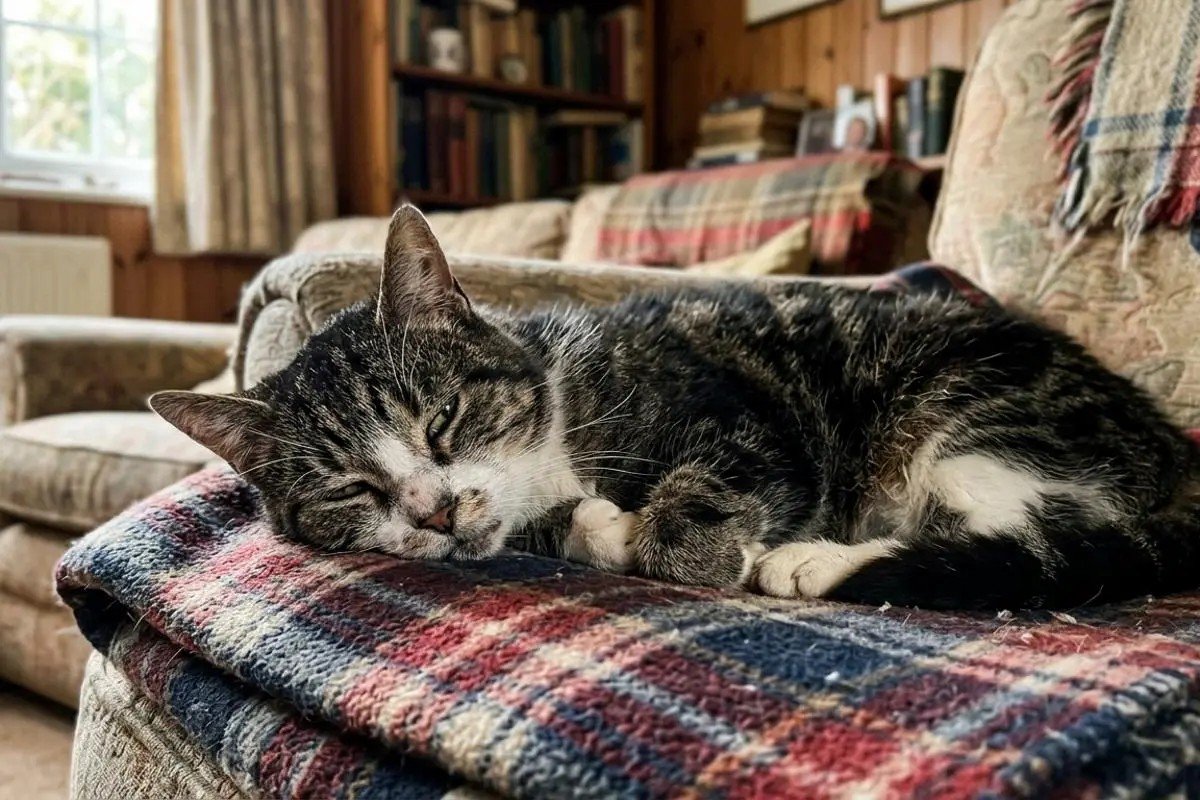

If you are asking whether it may be time to say goodbye, you are probably already noticing that something has changed.
Maybe your dog is struggling to get comfortable at night. Maybe your cat no longer comes to the places where they used to rest. Maybe appetite, breathing, mobility, or interest in the family has changed slowly enough that you are not sure where normal aging ends and suffering begins.
There is rarely one perfect moment that makes the decision obvious. More often, families begin to recognize a pattern. Looking at that pattern carefully can help you understand your pet’s quality of life and decide when it is time to have a more focused conversation with your veterinarian.
I am Dr. Jake Labriola, founder of Calm Paws Vet . My work focuses on helping Long Island families navigate hospice, quality-of-life decisions, and peaceful end-of-life care at home.
There Is Usually More Than One Sign
One difficult day does not necessarily mean it is time for euthanasia. What matters more is whether changes are persistent, whether they can be comfortably managed, and whether several areas of your pet’s life are declining together.
Pain or Difficulty Getting Comfortable
Watch for restlessness, panting when your pet is not hot, trembling, an unusual posture, difficulty settling down, or reluctance to move. Breathing difficulty also deserves prompt veterinary attention.
Eating Less or Losing Interest in Food
A change from normal eating to reduced meals, coaxed eating, or refusing favorite foods can be important, especially when it happens alongside other signs of decline.
Trouble Standing or Moving
Consider whether your pet can still rise, reach food and water, use the litter box or go outside, and move without obvious distress. Assistance may help some pets, but increasing mobility problems can significantly affect comfort.
Changes in Hygiene
Pets who can no longer groom themselves, stay clean, reposition comfortably, or control urination and bowel movements may require increasing assistance. The important question is whether those needs can still be managed without ongoing distress.
Withdrawal or Loss of Interest
A pet may stop greeting family members, seeking affection, playing, exploring, or participating in routines they once enjoyed. Look for changes from your pet’s own normal behavior rather than comparing them with another animal.
Confusion or Restlessness
Senior pets may develop pacing, nighttime restlessness, disorientation, changes in sleep, or difficulty navigating familiar spaces. Your primary veterinarian can help determine whether these changes may be treatable or manageable.
More Difficult Days Than Comfortable Ones
A simple calendar can help. Mark days as comfortable, difficult, or mixed. Over time, the trend can be easier to see on paper than it is when you are living through the changes one day at a time.
No One Sign Decides It
Appetite, mobility, pain, breathing, hygiene, and behavior should be considered together. A change in one area may be treatable. Several persistent changes can signal that it is time to reassess your pet’s overall comfort.
The HHHHHMM Quality of Life Scale
The HHHHHMM Quality of Life Scale was developed by veterinary oncologist Dr. Alice Villalobos. It gives families and veterinary teams a structured way to look at several areas of daily comfort rather than relying on one symptom or one difficult day.
Is pain being controlled? Is your pet able to breathe and rest comfortably?
Is your pet eating enough voluntarily, or has eating become difficult or dependent on significant encouragement?
Is your pet drinking adequately and staying hydrated?
Can your pet remain reasonably clean and comfortable, with assistance when needed?
Does your pet still respond to family, affection, favorite routines, or other things they have historically enjoyed?
Can your pet move well enough, independently or with appropriate assistance, to meet basic daily needs?
Looking at recent days as a whole, are comfortable and engaged days still outweighing difficult ones?
The scale scores seven categories from 1 to 10. VCA notes that an overall score greater than 35 may suggest an acceptable quality of life. That number should not be treated as a stand-alone decision about euthanasia. The trend, your pet’s medical condition, their individual needs, and a veterinarian’s assessment all matter.
For a complete walkthrough, visit our HHHHHMM Quality of Life Scale guide .
Learn more about the scale through VCA Animal Hospitals and review broader end-of-life care guidance from the American Animal Hospital Association .
Questions Worth Asking Yourself
Quality-of-life tools are useful, but your knowledge of your own pet matters too. These questions can help you notice what daily life feels like for them now.
- What are the things my pet has always enjoyed, and can they still enjoy any of them?
- Can my pet rest comfortably for meaningful parts of the day?
- Are pain, nausea, breathing problems, anxiety, or other symptoms adequately controlled?
- Can my pet eat, drink, move, and stay clean with a reasonable level of help?
- Are comfortable days still occurring regularly?
- Has my pet’s world become much smaller because of discomfort or physical limitations?
- If nothing improved from where we are today, would this still feel like an acceptable level of comfort for my pet?
Sometimes the Next Step Is Hospice, Not Euthanasia
What Hospice and Palliative Care Can Do
A decline in quality of life does not automatically mean euthanasia must happen immediately. Depending on your pet’s diagnosis and symptoms, palliative or hospice care may help manage pain, nausea, anxiety, mobility challenges, hydration needs, or other sources of discomfort.
AAHA describes palliative care as symptom and pain management intended to minimize suffering, while hospice adds planning for later-stage illness, expected decline, possible crises, and the eventual end-of-life decision.
When Treatment Is No Longer Restoring Comfort
The conversation changes when symptoms can no longer be adequately controlled or the burden of treatment is outweighing the comfort it provides.
That is a good time to talk openly with your primary veterinarian or an end-of-life veterinarian about your pet’s prognosis, realistic options, and how to avoid a crisis-driven goodbye.
If your pet is experiencing severe breathing difficulty, collapse, uncontrolled pain, repeated seizures, or another acute medical emergency, contact your primary veterinarian or the nearest emergency veterinary hospital. Calm Paws Vet focuses on hospice and in-home euthanasia and does not provide emergency life-saving treatment.
Why Some Families Choose an In-Home Goodbye
For a very sick or mobility-limited pet, traveling to a veterinary clinic can add stress to an already difficult day. An in-home appointment allows your pet to remain in a familiar environment, whether that is a favorite bed, the couch, a quiet room, or another comfortable place in the home.
It also gives your family privacy and allows you to stay close to your pet throughout the appointment.
Calm Paws Vet uses a sedation-first approach. Dr. Jake administers a pre-euthanasia sedative so your pet can become deeply relaxed and asleep before the final medication is given.
You can read the full process on our What to Expect page .
You Do Not Need Absolute Certainty Before You Ask for Help
Many families wait for a moment when they expect the answer to feel completely obvious. Sometimes that moment never arrives.
It is reasonable to start the conversation while you still have questions. A veterinarian can help you look at your pet’s diagnosis, symptoms, response to treatment, quality-of-life pattern, and what a realistic next few days or weeks may look like.
Sometimes that conversation leads to a hospice plan and more time together. Sometimes it confirms that a peaceful goodbye should be planned. The purpose of the conversation is not to pressure you. It is to help you make an informed decision centered on your pet’s comfort.
Questions About Knowing When It Is Time
Does a score below 35 mean I have to euthanize my pet?
No. The HHHHHMM scale is a decision-support tool, not an automatic instruction. A low or declining score is a reason to talk with your veterinarian about comfort, treatment options, prognosis, and whether euthanasia should become part of the plan.
Is it wrong to consider euthanasia if my pet still eats?
Appetite is only one part of quality of life. Some pets continue eating while experiencing serious problems with pain, breathing, mobility, hygiene, anxiety, or another aspect of daily comfort. The whole picture matters more than any single sign.
Should I wait until my pet stops eating completely?
Not necessarily. Waiting for one specific symptom can allow other sources of suffering to become more severe. It is better to consider your pet’s overall comfort and discuss meaningful changes with a veterinarian.
Should I call my regular veterinarian or an in-home veterinarian?
Either can be appropriate. Your primary veterinarian knows your pet’s medical history and may be able to adjust treatment or help with hospice planning. If you are specifically considering a home euthanasia appointment, you can also contact Calm Paws Vet directly. A referral is not required.
What if my pet has a good day after several bad days?
One good day can be meaningful, but quality-of-life decisions are usually clearer when you look at the trend over time. Keeping a simple daily record can help you see whether comfortable days are returning consistently or becoming increasingly uncommon.
Can Dr. Jake help me think through the decision?
Yes. You can contact Calm Paws Vet to discuss what you are seeing, your pet’s quality of life, and whether an end-of-life appointment may be appropriate. You do not need to have the decision fully made before reaching out.
You Can Start With a Conversation
If you are worried about your pet’s comfort or unsure whether it is time, you are welcome to contact Dr. Jake. There is no requirement to have already made a decision before you call.
Calm Paws Vet cares for families across Suffolk County and Long Island’s North Shore. In the Three Village and Setauket area, in-home visits are scheduled for weekday evenings and weekends. Weekday daytime visits are available for families further out on Long Island.