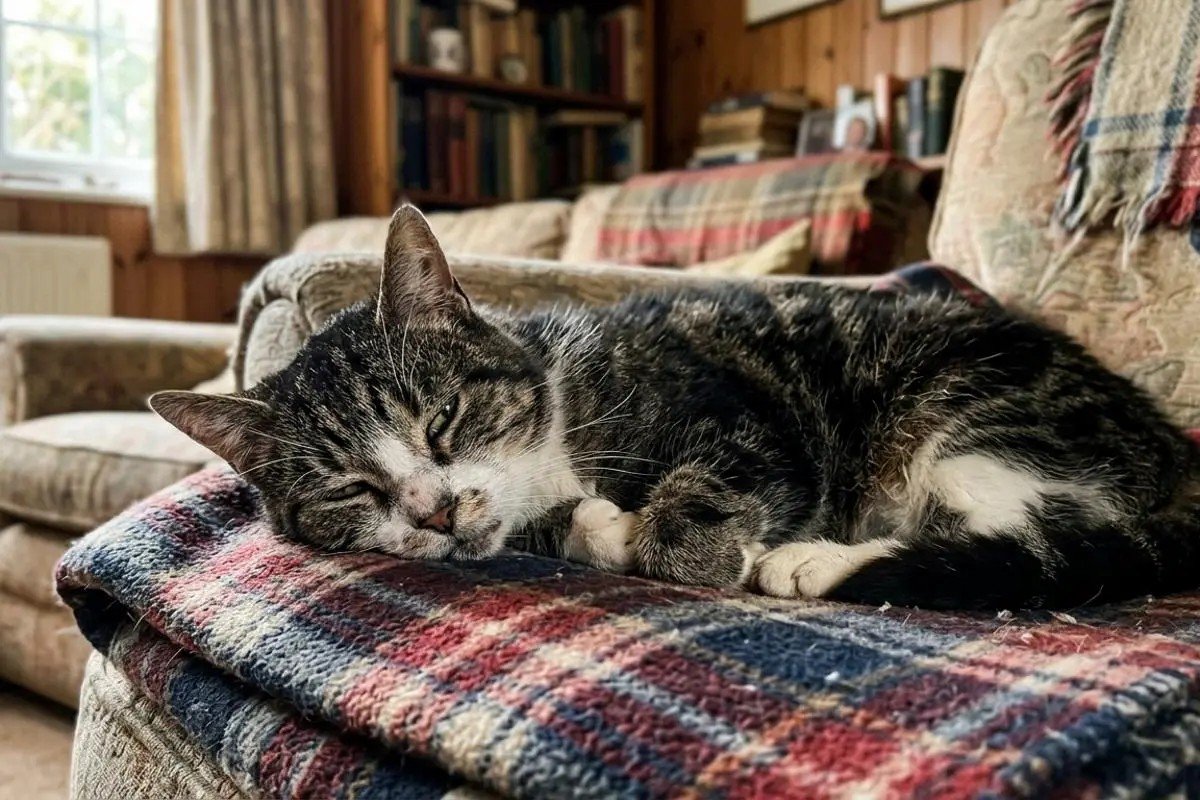

The loss of a pet can change the entire rhythm of a home, and the animals who remain may notice that change too.
A surviving dog or cat may eat differently, sleep more or less, become more vocal, seek extra attention, spend time in the other pet's favorite places, or simply behave differently for a while.
These changes do not look the same in every animal, and they should not automatically be assumed to be grief. Understanding what researchers and veterinarians have observed can help you support your surviving pet while also watching for signs that deserve medical attention.
Do Dogs and Cats Grieve the Loss of Another Pet?
We cannot ask dogs and cats to describe the emotional experience of loss, so researchers are careful about claiming that animal grief is identical to human grief.
What we can observe are behavioral changes after the death of an animal companion. Studies based on caregiver observations have documented changes in eating, sleeping, play, activity, vocalization, attention-seeking, fearfulness, hiding, and searching for a deceased companion's usual places.
In dogs, research suggests that the quality of the relationship between the surviving and deceased dogs may matter more than simply how long they lived together. Research in cats has also found grief-like behavioral changes, particularly when the animals had shared a close relationship.
What Loss Can Look Like in Dogs and Cats
The response varies widely. Some pets show noticeable changes while others appear relatively unaffected.
Changes Reported in Dogs
- Eating less or changing how quickly they eat
- Sleeping more or changing sleeping locations
- Playing less or showing reduced activity
- Seeking more attention from family members
- Becoming more fearful or unsettled
- Vocalizing more than usual
- Visiting places associated with the pet who died
- Appearing restless or searching around the home
Changes Reported in Cats
- Eating less or changing eating behavior
- Playing less
- Seeking more attention from people or other pets
- Vocalizing more frequently
- Hiding or spending more time alone
- Looking for the lost companion
- Spending time in the deceased pet's familiar places
- Changes in normal social behavior
Should the Surviving Pet See the Body?
Some families want their other pets to have an opportunity to see or sniff their companion after death. Others prefer not to include them. Either choice can be reasonable.
Research has not shown a clear behavioral benefit from viewing the body. In one study involving dogs and cats, surviving animals who saw the deceased companion did not have significantly different reported behavioral changes from animals who did not. A later study of surviving dogs reached a similar finding.
If your other pet is calm and you would like to allow a brief opportunity to investigate after an in-home euthanasia visit, you can discuss that with Dr. Jake. There is no need to force interaction. Some pets may sniff or approach, while others may show little interest and walk away.
If your surviving pet is highly anxious, reactive around visitors, or likely to interfere with the appointment, it may be better for them to stay in another comfortable part of the home and rejoin the family afterward.
How to Support Your Surviving Pet
There is no single treatment for grief-like behavior after companion loss. The goal is to provide stability, appropriate attention, and careful observation while your household settles into a new routine.
Keep Important Routines Predictable
Try to keep meals, walks, play, bedtime, medications, and other familiar parts of the day reasonably consistent. The household has already changed, so maintaining familiar routines can provide stability.
Offer Calm Attention Without Forcing Interaction
Your surviving pet may want more closeness, or they may spend more time alone. Continue offering affection, walks, brushing, play, and companionship in ways your pet normally enjoys, while allowing them to disengage if they choose.
Use Gentle Enrichment
Familiar walks, food puzzles, sniffing opportunities, quiet play, window perches, boxes for cats, or other favorite activities can help provide structure and engagement.
Do Not Rush to Remove Every Familiar Item
There is no evidence-based schedule for when beds, blankets, toys, or bowls must be removed. If your surviving pet seeks out a familiar resting place or blanket, there is generally no reason to take it away immediately.
Make changes gradually when they make sense for your household rather than following an arbitrary number of days or weeks.
Watch for Medical Problems, Not Just Behavior
Vomiting, diarrhea, pain, marked lethargy, difficulty breathing, persistent hiding, significant weight loss, or major changes in eating and drinking deserve veterinary attention rather than being attributed to grief alone.
Take Changes in Eating Seriously
Eating less can occur after companion loss, but appetite changes can also be caused by illness, pain, nausea, dental disease, gastrointestinal problems, kidney disease, endocrine disease, and many other medical conditions.
This is particularly important in cats, senior pets, very small dogs, and animals with chronic medical conditions.
When Should You Call Your Veterinarian?
There is no universal number of days that separates a normal adjustment from a problem. What matters more is the severity of the change, whether your pet is physically healthy, and whether normal function is returning.
Should You Get Another Pet Right Away?
There is no universal answer, and a new pet should not be treated as a standard remedy for grief-like behavior.
Some animals enjoy living with other pets. Others are comfortable as the only animal in the home. The right decision depends on your surviving pet's temperament and health, the relationship they had with the pet who died, your household, and whether you are personally ready for another animal.
Surviving Pets and Companion Loss
How long will my surviving pet act differently?
There is no reliable universal timeline. Some pets show relatively short-lived changes while others may behave differently for months. Research has documented considerable variation between animals.
Rather than waiting for a specific week on the calendar, watch whether your pet is eating, drinking, sleeping, interacting, and gradually functioning in a healthy way. Contact your veterinarian if changes are severe, persistent, worsening, or accompanied by physical symptoms.
Should I let my surviving pet smell or see the pet who died?
You may allow a calm surviving pet to briefly investigate if you are comfortable doing so, but research has not demonstrated that seeing the body prevents later searching or other behavioral changes.
Do not force the interaction. Some pets investigate while others show little interest.
My pet keeps sleeping in the other pet's favorite spot. Should I stop them?
Seeking out a deceased companion's familiar resting area has been reported in research on surviving dogs and cats. If the location is safe and your pet seems comfortable there, there is generally no need to prevent it simply because it belonged to the other pet.
Can grief make my pet stop eating?
Reduced food intake has been reported after companion loss, but appetite loss can also signal medical illness. Contact your veterinarian promptly if your pet stops eating or has a substantial change in appetite rather than assuming grief is the cause.
Does my surviving pet need medication?
Not necessarily. Many pets adjust with time, routine, enrichment, and support. If anxiety or other behavioral changes are significant or persistent, your veterinarian can examine your pet, rule out medical causes, and determine whether behavioral treatment, referral, or medication is appropriate.
Would another dog or cat help?
Possibly, but there is no guarantee. Some pets enjoy animal companionship while others may find a new arrival stressful. Consider your surviving pet's age, health, temperament, and previous relationships before bringing another animal into the home.
Sources and Further Reading
Research into grief-like behavior in companion animals is still developing, so this guide distinguishes observed behavioral changes from claims about exactly what an animal is feeling.
Questions After an In-Home Goodbye Are Welcome
If Calm Paws Vet has helped your family say goodbye to one pet and you are concerned about changes in another animal at home, you are welcome to ask Dr. Jake what you are seeing.
For a surviving pet who appears physically ill, has stopped eating, or needs ongoing medical treatment, contact your regular veterinarian for an examination.
More Support for Your Family
Your Surviving Pet May Need Support Too
Changes after the loss of a companion can be subtle or very noticeable. Give your pet stability, watch their health carefully, and ask for veterinary help when a change is significant or concerns you.