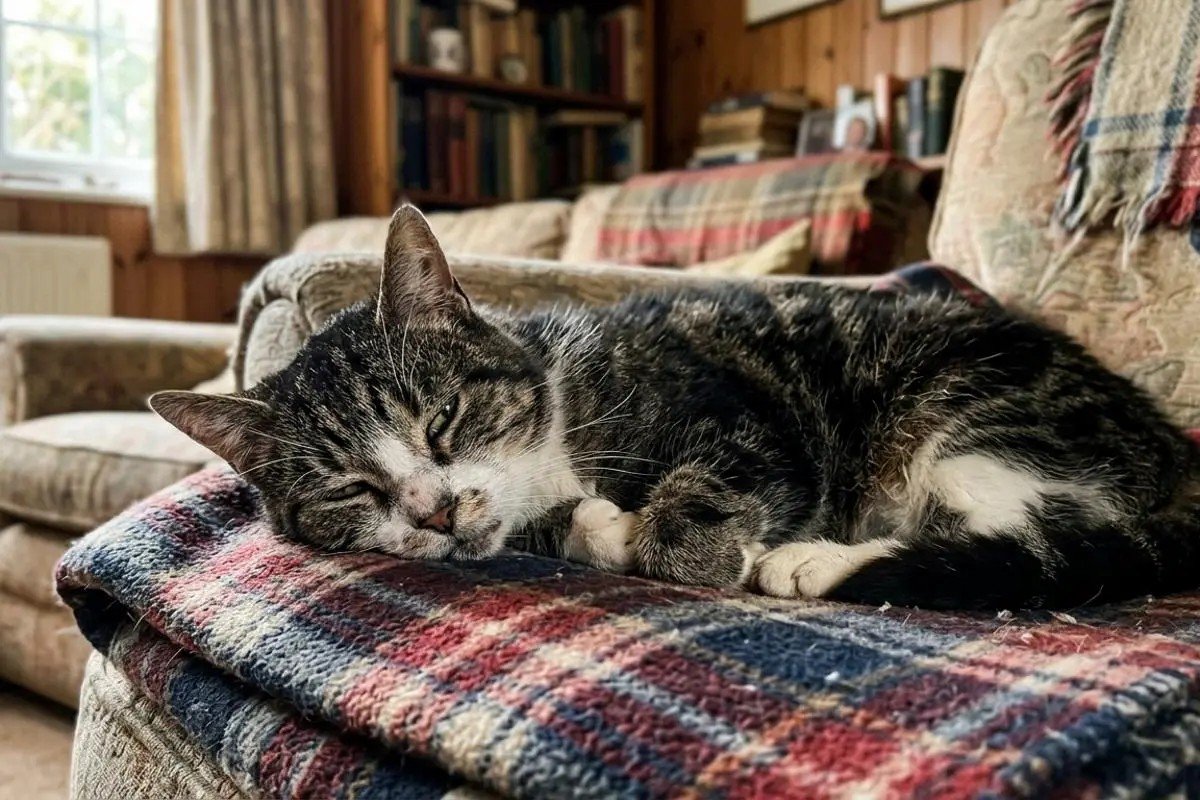

Watching your dog move through the final chapter of their life is one of the most difficult experiences a family can go through. Recognizing the signs a dog is dying brings a particular heaviness in not knowing what to look for, and a unique loneliness in being the one who has to notice first. I’m Dr. Jake Labriola, founder of Calm Paws Vet, and I wrote this guide to help families on the North Shore of Long Island recognize these changes honestly, respond with comfort rather than panic, and know when to reach out for help.
Please note: some of these symptoms, individually, can happen in a pet who is simply sick or aging, not actively fading. Several of these signs a dog is dying coming together, appearing over days or weeks and not responding to treatment, is what points toward the end of life.
Early Changes: Eating, Drinking, and Fatigue
When looking for the clinical signs a dog is dying, the earliest indicators usually involve a massive withdrawal of basic physical energy and interest in the world.
1. Loss of Appetite and Refusal of Water
One of the earliest and most reliable indicators is a drop in appetite. Your dog may first refuse regular food, then treats, then hand-fed favorites, then water. This is your dog’s body redirecting energy away from digestion as internal systems begin to shut down. Forcing food at this stage usually causes more distress than comfort, and a total refusal of water is one of the strongest signs a dog is dying peacefully.
What helps: offer small, bland, high-value options (plain chicken, scrambled egg, a lick of peanut butter) without pressure. If your dog refuses everything for 24 hours, it’s worth a conversation with your veterinarian.
2. Extreme Fatigue and Weakness
A fading pet will spend more and more time lying down. They may struggle to lift their head, to wag their tail, or to stand up. This is very different from ordinary old-dog slowness, it is a deeper, systemic depletion of energy from the whole body that ranks among the unmistakable signs a dog is dying.
What helps: soft, supportive bedding in a quiet part of the house. Avoid trying to get them up for walks they cannot physically do. Let them rest.
Physical Signs a Dog Is Dying in the Final Days
In the final days or hours, circulation, respiration, and neurological control will begin to change rapidly.
3. Changes in Breathing
Breathing may become labored, noisy, or highly irregular. Some dogs take fast, shallow breaths, while others take slow, long ones with prolonged pauses between them. You may hear a gentle rattle or see the abdomen working hard with each breath. These respiratory shifts are critical physical signs a dog is dying.
What helps: keep the room cool and calm. Elevate the head slightly if it is comfortable for your dog. If breathing is openly distressed, gasping, extended neck, panicked eyes, this is a reason to call your veterinarian right away.
4. Changes in Body Temperature and Circulation
As circulation slows down, the paws, ears, and gums may feel noticeably cooler to the touch. Gums can become pale, gray, or bluish rather than their usual healthy pink. When families notice these cold extremities, they are often witnessing the late cardiovascular signs a dog is dying.
What helps: a soft blanket, especially over the back and hips. Avoid heating pads impaired circulation can lead to burns.
5. Loss of Bladder and Bowel Control
Many dogs lose control of their bladder and bowels in their final days. This is an involuntary neurological change, not a behavior or training problem. They are not aware of it happening, and they are not being “bad.” For house-trained dogs, these specific signs a dog is dying can sometimes be emotionally distressing to them if they realize they made a mess.
What helps: waterproof pads under the bedding, gentle cleanings, no tone of displeasure. Your dog is not misbehaving.
6. Confusion and Disorientation
Some dying dogs become confused pacing, pressing their head against walls, staring into corners, failing to recognize familiar people briefly. In senior dogs, this may be complicated by pre-existing cognitive dysfunction syndrome, sometimes called “dog dementia.” The Cornell University College of Veterinary Medicine and similar academic sources have good educational material on cognitive change in senior pets.
What helps: keep the environment familiar and dim. Speak in a soft, steady voice. Reduce stimulation.
7. Withdrawal from the Family
This is one of the most emotionally painful signs for families to witness. A dog who has always greeted you at the door may no longer lift their head. A dog who has always slept next to you may suddenly seek solitude under a bed, in a closet, in a quiet corner of the yard. Some dogs do the opposite: they want to stay physically closer than usual.What matters most when tracking the signs a dog is dying is the sharp change from your dog’s historic baseline.
There is not one correct dying behavior. What matters is the change from your dog’s baseline.
8. Muscle Twitching or Seizures
Some pets experience mild muscle twitching, localized trembling, or, less commonly, seizures as metabolic balance fails. These signs a dog is dying can be distressing to watch but are usually not experienced as pain by a dog whose consciousness has already dimmed significantly.
What helps: stay calm, keep them on soft bedding where they cannot fall, remove objects they might hit. If seizures are persistent or new, call your veterinarian, medication can reduce them.
9. A Stillness That Families Describe as “Waiting”
This one is harder to describe clinically, but families name it often: a quality of waiting. The dog is not in acute distress, but they are no longer engaged with the living world around them. They are lying still, breathing quietly, eyes half-closed, somewhere in between.
This stage is often when families say, “I think he’s telling us.” They are usually right.
When to Call the Vet for End-of-Life Care
You should call your primary veterinarian, or an in-home hospice vet like us at Calm Paws, when you observe these terminal signs a dog is dying:
-
Breathing has become openly labored, loud, or panicked
-
Your dog appears to be in pain and current medication isn’t helping stop the signs a dog is dying uncomfortably
-
Seizures are occurring, especially if they are new or repeated
-
Several of the core signs a dog is dying have arrived in the same week
-
You have a deep gut feeling even without physical proof that your dog is ready
That last one is not a soft reason. It is, in my professional experience, one of the most reliable signs a dog is dying with dignity.
Comforting a Dog at the End of Life
The smallest things matter. A familiar blanket. Your voice. A quiet room. A cool washcloth on the paws. Permission to rest. Your presence, without asking anything from them.
You do not need to entertain a dying dog. You do not need to cheer them up. You only need to be with them.
Frequently Asked Questions
How long does the dying process take in dogs?
It varies from hours to several days. Dogs with a clear terminal illness often decline over two to seven days. Dogs who die of old age and slow organ wind-down sometimes linger longer.
Should I let nature take its course or consider euthanasia?
There is no single right answer. Nature is not always gentle. For dogs who are clearly uncomfortable, who are not eating or drinking, or whose quality of life has collapsed, a peaceful veterinary euthanasia is often the kindest option.
Can a dog wait to die until I am home?
Many families describe this. Whether it’s a literal holding-on or a coincidence of timing, it happens often enough that most hospice vets take it seriously.
Will my other dog be confused if I don’t let him see the body?
Often yes. Many behaviorists believe that allowing other pets a few quiet moments with the body helps them understand rather than simply searching for their companion for weeks.
If You’d Like to Talk
If you are seeing several of these signs and you are not sure what to do next, please call me at 631-371-2919 or reach out through the contact page. I care for families across Suffolk County and Long Island’s North Shore. In the Three Village and Setauket area, in-home visits are scheduled for weekday evenings and weekends, with daytime weekday visits available for families further out on Long Island. Sometimes a ten-minute call is all a family needs to feel less alone in the decision.