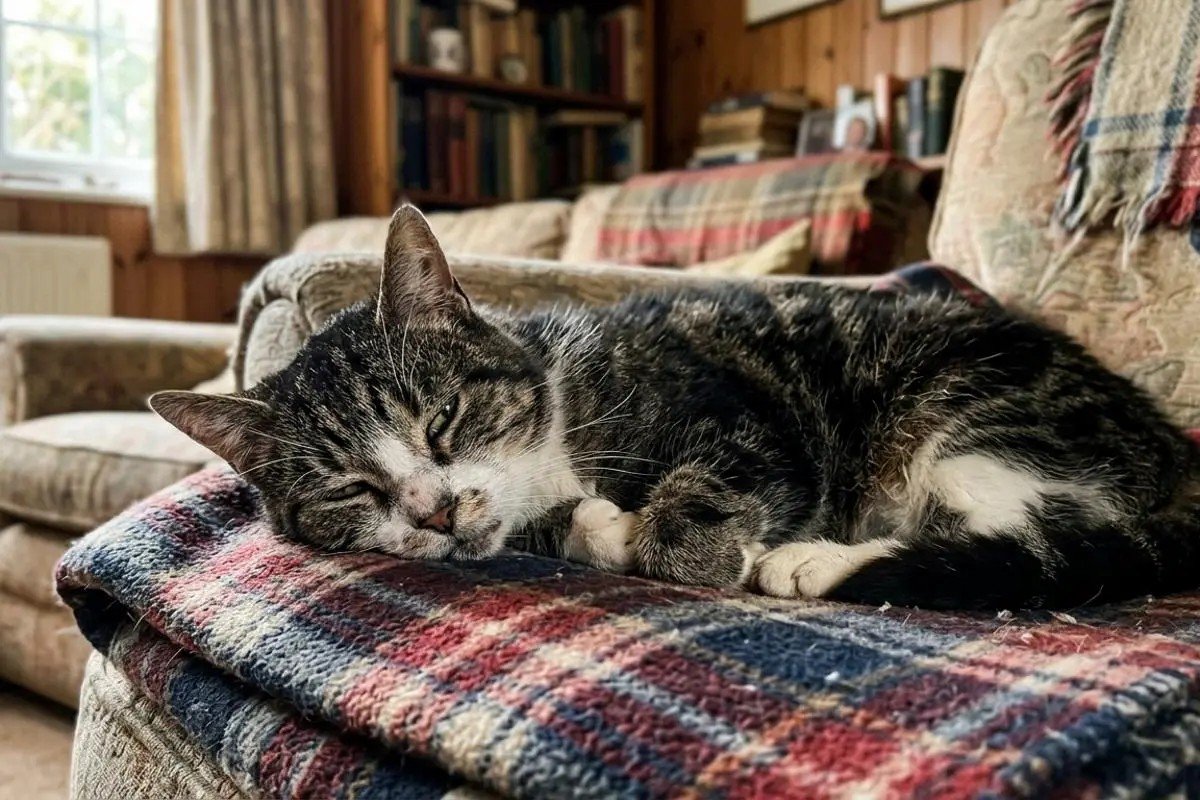
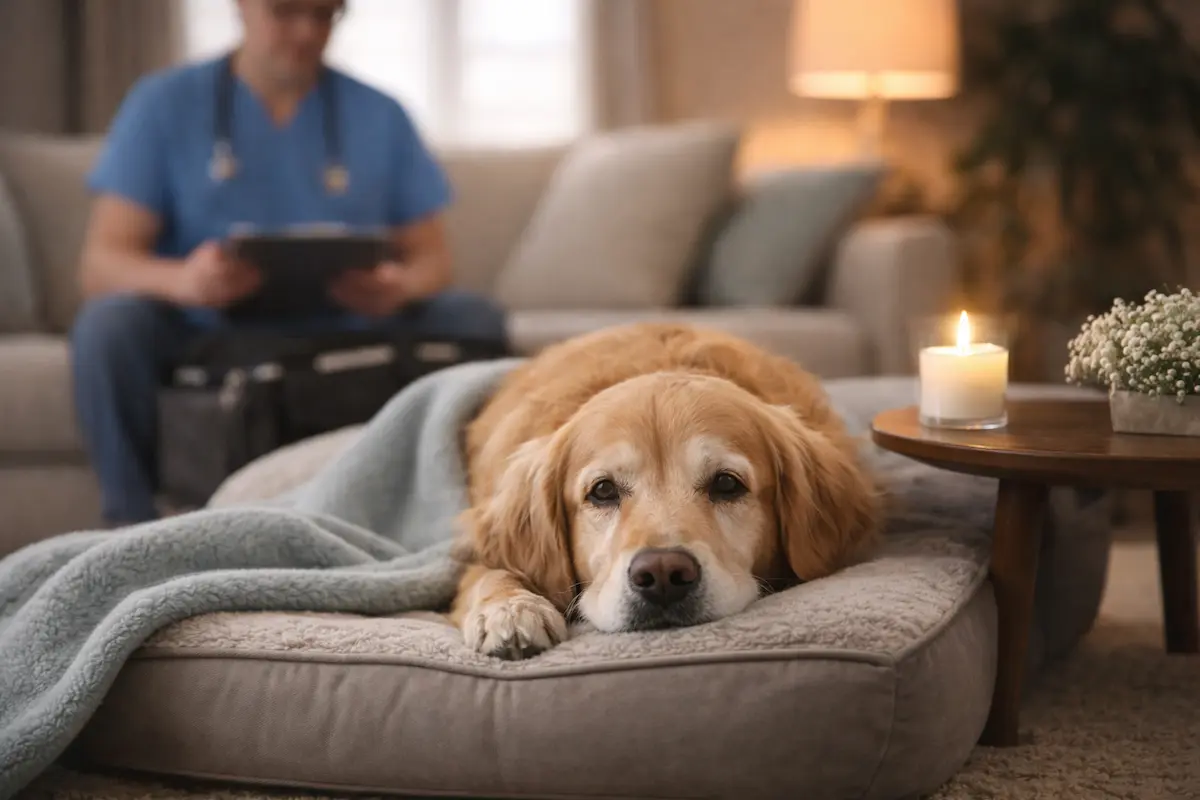
In-home pet euthanasia allows a dog or cat to remain in a familiar place while a veterinarian provides end-of-life care at home.
For some families, the greatest benefit is simple: their pet does not need another car ride or another unfamiliar environment during an already difficult stage of life.
But choosing where the goodbye happens is only one part of the decision. Families also have questions about timing, sedation, who can be present, what they may see during the appointment, what happens afterward, and how to know whether home is the right setting for their individual pet.
This guide explains those choices without assuming that every family or every pet needs the same kind of goodbye.
What Is In-Home Pet Euthanasia?
In-home pet euthanasia is humane veterinary euthanasia performed in the pet’s home rather than at a veterinary hospital or clinic.
A veterinarian comes to your home, discusses the plan with your family, administers medication according to the euthanasia protocol, confirms when your pet has passed, and can discuss or coordinate aftercare.
Calm Paws Vet uses a sedation-first process so your pet can become deeply relaxed and asleep before the final euthanasia medication is administered.
Why Do Some Families Choose Pet Euthanasia at Home?
AAHA end-of-life guidance recognizes both home euthanasia and euthanasia in a veterinary hospital as legitimate options. Home may be especially meaningful when transportation, mobility, anxiety, or privacy are important considerations.
Familiar Surroundings
Your pet can remain on their own bed, couch, blanket, rug, porch, or another familiar place rather than adapting to a new environment.
No Additional Car Ride
A weak, painful, anxious, or mobility-limited pet does not need to make another trip when an in-home visit is appropriate.
More Family Privacy
Your family can focus on your pet in your own space without navigating a waiting room or public departure afterward.
Choice of Location
The appointment may be able to take place in the room or familiar area where your pet already feels comfortable.
Family Involvement
Children and other family members can participate in ways appropriate for them. Other pets are welcome if well behaved and matching the calm energy in the room..
Time Together
Your family can have quiet time with your pet after they have passed before moving forward with aftercare.
How Do You Know When It May Be Time?
Deciding where euthanasia should happen is usually easier than deciding when.
AAHA recommends looking at the whole pet rather than relying on a single symptom. Important areas include comfort, breathing, eating, drinking, mobility, elimination, interaction, and whether treatments are still providing enough benefit.
Comfort
Can pain, nausea, anxiety, breathing difficulty, or other distress still be adequately managed?
Food and Water
Is your pet able and willing to eat and drink enough to maintain reasonable comfort?
Mobility and Hygiene
Can your pet rest, move, toilet, and remain reasonably clean with manageable assistance?
Connection and Good Days
Are there still meaningful periods of comfort, interaction, curiosity, or enjoyment in your pet’s day?
Quality-of-life tools can help organize what you are seeing, but they should not function as an automatic euthanasia test.
Looking at the direction of change over several days or weeks can often be more useful than focusing on one unusually good or difficult day.
Hospice and Palliative Care May Come Before Euthanasia
A progressive or terminal diagnosis does not always mean euthanasia needs to happen immediately.
Veterinary hospice and palliative care focus on reducing suffering and preserving meaningful quality of life during the final stage of illness. Depending on the individual pet, that may include symptom control, environmental changes, mobility assistance, nutritional support, caregiver planning, and preparation for future decline.
AAHA recommends discussing both a daily care plan and a crisis plan so families know which changes can be managed at home and which ones mean the medical situation has changed.
How Does In-Home Pet Euthanasia Work?
Exact medications and techniques are veterinary decisions based on the individual patient. Calm Paws Vet follows a sedation-first process and explains what will happen before medications are given.
1
A Conversation Comes First
Dr. Jake meets your family and pet, answers questions, reviews the plan, and confirms important details such as family participation and aftercare.
2
Your Pet Stays Somewhere Comfortable
The visit can often take place on a familiar bed, couch, blanket, quiet room, or other comfortable location where veterinary access is safe.
3
Sedation Is Given First
A pre-euthanasia sedative is administered with a small injection under the skin. The initial injection may feel like a brief pinch.
Your pet is then given time to become increasingly relaxed and sleepy.
4
Dr. Jake Assesses the Sedation
Medication response varies between animals. Dr. Jake gives the sedation time to work and assesses your pet before proceeding.
5
The Final Medication Is Administered
Once your pet is deeply sedated and asleep, Dr. Jake administers the final euthanasia medication and remains with your pet until he confirms that they have passed.
6
Your Family Has Time Together
Afterward, your family can have quiet time with your pet before moving into the aftercare portion of the visit.
Calm Paws Vet Uses a Sedation-First Approach
AAHA end-of-life guidance recommends considering preliminary sedation or anesthesia for companion animals undergoing euthanasia, particularly when families are present.
The purpose is to reduce stress and allow the pet to become deeply relaxed before the final medication.
The Injection
The initial sedative injection may cause a brief pinch or momentary discomfort.
The Transition
Your pet becomes progressively more relaxed, sleepy, and less responsive as the medication works.
The Assessment
Dr. Jake assesses your individual pet rather than proceeding according to an exact timer.
Learn More About the Process
Who Can Be Present During In-Home Euthanasia?
There is no required number of people and no requirement that everyone stay for every part of the appointment.
Adults
Some people want to remain beside their pet throughout the entire visit. Others prefer to say goodbye before the final medication. AAHA guidance specifically recommends respecting either choice.
Children
Children may be present when their family feels it is appropriate. Preparing them with simple, age-appropriate information and giving them choices can help make the experience less confusing.
Read our
guide to talking with children about pet death
.
Other Household Pets
Other pets are welcome if well behaved and matching the calm energy in the room.
There is no requirement that another pet watch the euthanasia or see the body afterward.
Friends or Extended Family
If another person is important to your pet or to your family, you can discuss whether their presence would make the day more supportive.
Physical Changes Can Occur Around the Time of Death
Knowing about normal physical changes beforehand can make them less alarming if they occur.
Deep Breath or Sigh
A pet may have one or more deep breaths or breathing-like movements after losing consciousness.
Muscle Movement
Brief twitching or other reflex movement can sometimes occur and does not necessarily indicate awareness.
Open Eyes
A pet’s eyelids may remain partly or fully open after death.
Bladder or Bowel Release
Urine or stool may be released as the muscles of the body relax.
AVMA owner guidance explains that reflex movements or deep breaths after euthanasia do not mean the pet is experiencing pain or suffering. Dr. Jake can explain anything you see during the visit.
What Happens After In-Home Pet Euthanasia?
After Dr. Jake confirms that your pet has passed, your family can have quiet time together before the aftercare plan moves forward.
Whenever possible, discussing aftercare before the appointment means you do not have to make every practical decision in the minutes immediately after your pet’s death.
Private Cremation
Your pet is cremated alone and the cremated remains are returned to your family.
Communal Cremation
Your pet is cremated respectfully alongside other pets and individual ashes are not returned.
Your Own Arrangements
If your family has appropriate aftercare arrangements elsewhere, discuss the plan with Dr. Jake before the appointment.
Current cremation packages, keepsakes, transportation, return information, and pricing are maintained on the dedicated Aftercare page so families always have one current source for those details.
In-home euthanasia is not a substitute for emergency life-saving care.
If your pet is experiencing severe breathing difficulty, uncontrolled seizures, repeated collapse, severe uncontrolled pain, significant bleeding, or another acute medical emergency, contact your primary veterinarian or the nearest emergency veterinary hospital.
Calm Paws Vet focuses on hospice and in-home euthanasia rather than emergency life-saving treatment.
Questions About In-Home Pet Euthanasia
Is in-home pet euthanasia different from euthanasia at a veterinary hospital?
The goal is the same: humane veterinary euthanasia centered on minimizing pain, discomfort, fear, and anxiety. The primary difference is the setting.
At home, your pet can remain in familiar surroundings and avoid an additional car ride. In a hospital, the veterinary team has immediate access to the clinic environment, staff, and equipment. Either setting can provide compassionate care.
Will my pet be sedated first?
Calm Paws Vet uses a sedation-first approach. A pre-euthanasia sedative is given and allowed to take effect before the final euthanasia medication is administered.
Does the first injection hurt?
The initial sedative injection may feel like a brief pinch or momentary discomfort. Individual pets respond differently to injections.
Can I hold my pet during euthanasia?
You can generally remain close, touch, talk to, or comfort your pet when it is safe and practical for the veterinary procedure.
If holding your pet is important to you, mention that to Dr. Jake so the safest setup can be discussed.
Can children be present?
Yes, when the family feels participation is appropriate for the child. Some children choose to stay, while others prefer to say goodbye beforehand or return afterward.
Can our other pets be present?
Other pets are welcome if well behaved and matching the calm energy in the room. If another pet is anxious, protective, highly excited, or likely to interfere with veterinary care, another quiet space may be more comfortable.
How long does an in-home euthanasia appointment take?
Many Calm Paws Vet visits are completed in around 30 minutes, but every pet and family is different.
Medication response, questions, the medical process, and the amount of family time you want can affect the length of the visit.
Do I have to know for certain that it is time before I call?
No. You can ask questions about quality of life, hospice, the euthanasia process, scheduling, or aftercare before making a final decision.
Can I decide not to be present for the final medication?
Yes. Some people want to remain beside their pet throughout the entire visit. Others prefer to say goodbye before the final medication. AAHA end-of-life guidance recommends respecting either choice without making the caregiver feel guilty.
What happens to my pet afterward?
Your family can have time together after Dr. Jake confirms your pet has passed. The aftercare plan you selected can then move forward.
Calm Paws Vet can coordinate private or communal cremation, or you can discuss appropriate arrangements your family has made elsewhere.
Sources and Further Reading
Calm Paws Vet Serves Families Across Suffolk County
Calm Paws Vet provides in-home euthanasia and end-of-life support for dogs and cats across Suffolk County and Long Island’s North Shore.
In the Three Village and Setauket area, in-home visits are scheduled for weekday evenings and weekends, with daytime weekday visits available for families further out on Long Island.
If you are unsure which scheduling area applies to your address, call or text with your location.
More Guidance for Planning a Goodbye
In-Home Euthanasia Services
Review Calm Paws Vet’s service, approach, and current information about arranging an in-home visit.
What to Expect During the Visit
Walk through the Calm Paws Vet appointment step by step, including preparation, sedation, final medication, and family time.
How Do I Know When It’s Time?
Review changes in comfort, breathing, appetite, mobility, interaction, and the balance of good and difficult days.
Aftercare and Cremation Options
Review current private and communal cremation options, keepsakes, transportation, and return information.
Pet Hospice Care at Home
Learn how comfort-focused care may support a pet before euthanasia becomes the appropriate choice.
Frequently Asked Questions
Find answers about scheduling, service area, hospice, the appointment, and aftercare.
You Do Not Need to Feel Completely Ready Before You Call
If you are wondering whether it may be time, worried about what your pet will experience, or simply trying to understand how an in-home goodbye works, you can speak with Dr. Jake before deciding what comes next.