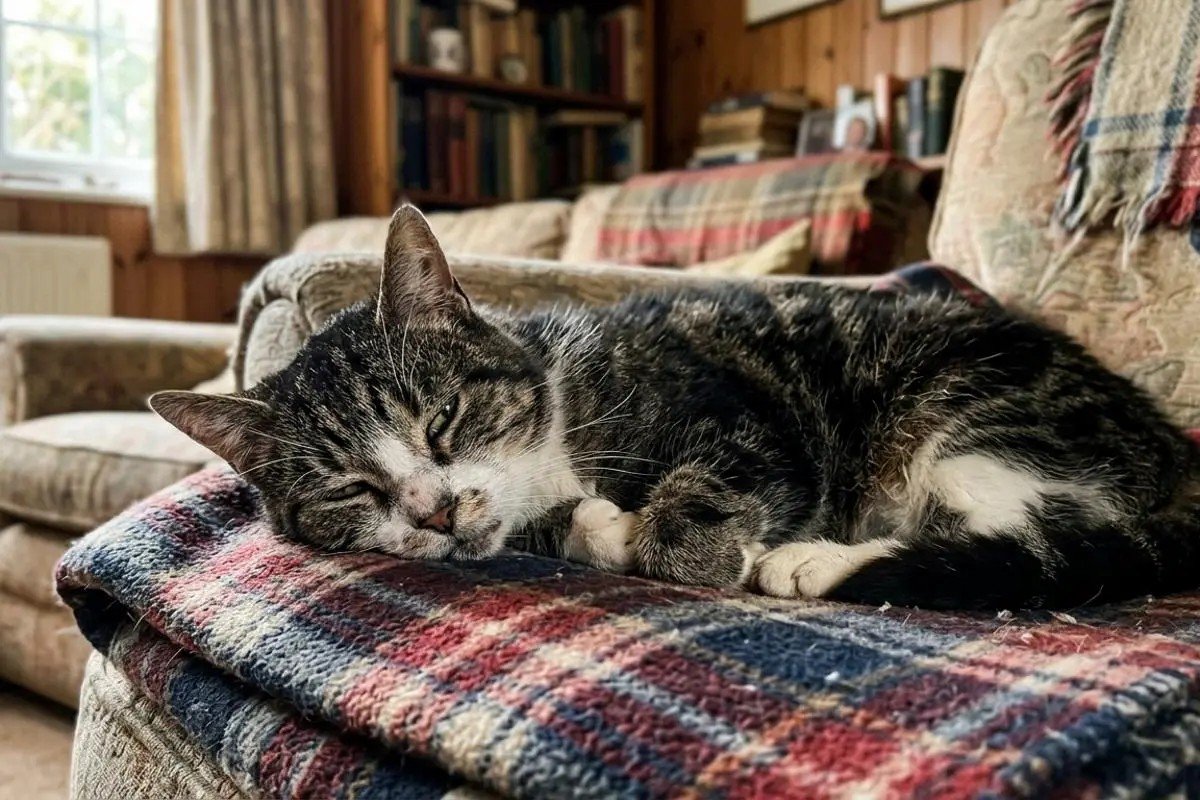

Cats can be remarkably subtle when they are sick, uncomfortable, or becoming weaker.
That can make the final stage of a cat's life especially difficult for families to recognize. A cat may sleep more, eat less, stop grooming, hide, move differently, or become less interested in familiar routines.
None of those changes automatically means that a cat is dying. Many are also signs of illnesses that may still be treatable or manageable.
The most useful question is not simply, “Is this a sign of dying?” It is, “What is causing this change, can it still be treated, and can my cat remain reasonably comfortable?”
Some Changes Need Veterinary Care Right Away
Do not wait for an end-of-life appointment if your cat is experiencing an acute medical emergency.
Calm Paws Vet focuses on hospice and in-home euthanasia and does not provide emergency life-saving treatment. If your cat needs immediate medical intervention, contact your regular veterinarian or the nearest emergency veterinary hospital.
A Major Change in Appetite
Cats approaching the end of life may eat much less or stop eating, but appetite loss is not specific to dying. Dental pain, nausea, kidney disease, gastrointestinal disease, cancer, infection, medication effects, and many other problems can reduce appetite.
Pay attention to the pattern. Is your cat eating smaller amounts, walking away after approaching the bowl, refusing favorite foods, losing weight, or showing signs of nausea?
Hiding or Withdrawing More Than Usual
A sick or painful cat may spend more time alone, choose enclosed resting places, or become less socially interactive. Cats may also hide because of fear, stress, pain, weakness, or changes in the household.
In a cat with advanced progressive disease, increasing withdrawal can become one part of a larger quality-of-life decline.
Grooming Has Declined
Cats usually spend a significant amount of time grooming. When a cat becomes painful, weak, nauseated, arthritic, or seriously ill, grooming may decline.
You may notice a coat that looks oily, dull, matted, or unkempt. Cats with reduced mobility may also develop urine or stool contamination if reaching or using the litter box has become difficult.
Signs of Pain or Physical Discomfort
Cats do not always cry or vocalize when they hurt. Pain may instead appear as squinting, a hunched or guarded posture, reluctance to move, changes in interaction, sensitivity to touch, difficulty jumping, reduced grooming, hiding, or altered sleeping positions.
Purring by itself should not be used as proof that a cat is comfortable. Look at the entire posture and behavior of the cat.
Breathing Becomes Difficult
A comfortable cat at rest normally breathes quietly without obvious effort. Rapid breathing, increased abdominal effort, an extended neck, difficulty settling, or open-mouth breathing can signal respiratory distress.
Breathing difficulty has many possible causes, including heart disease, asthma, fluid around or inside the lungs, cancer, airway disease, trauma, infection, and other serious conditions.
Mobility Has Significantly Declined
A cat who stops jumping, struggles with stairs, has difficulty getting into the litter box, walks stiffly, slips, or cannot reach familiar places may be dealing with pain, weakness, neurologic disease, arthritis, or another medical problem.
Mobility becomes especially important in an end-of-life assessment when your cat can no longer comfortably reach food, water, the litter box, or a preferred resting place despite reasonable help.
Circulation or Body Temperature Changes
During severe illness or the active dying process, circulation can change. Extremities may feel cooler and a cat may become increasingly weak or less responsive.
Gum color deserves particular attention. Pale, gray, blue, or purple gums can indicate a serious problem with circulation or oxygenation and should not simply be assumed to be part of normal dying.
Changes in Urination, Defecation, or Hygiene
Some seriously ill or very weak cats lose the ability to reach the litter box reliably or control elimination normally. Others develop accidents because of kidney disease, gastrointestinal illness, urinary disease, cognitive changes, pain, or mobility problems.
The meaning depends on the cause. What matters for quality of life is whether your cat can remain reasonably clean and comfortable and whether toileting itself is becoming difficult or distressing.
Interest in Daily Life Is Fading
One of the most useful end-of-life observations is whether your cat still has meaningful engagement with familiar parts of life.
That does not mean an older or terminally ill cat must play like a kitten. A quiet cat may still enjoy lying in a favorite sunny spot, watching through a window, resting near you, receiving gentle affection, eating a favorite food, or following a familiar routine.
Concern increases when those individualized signs of comfort and connection become rare while pain, nausea, weakness, breathing difficulty, anxiety, or other distress becomes more prominent.
Appetite loss, hiding, reduced grooming, accidents, weakness, and mobility changes can all occur in cats with potentially treatable conditions.
End-of-life concern becomes stronger when a cat has a life-limiting or progressive disease, several areas of daily function are worsening, treatments are no longer providing enough relief, and meaningful comfort is becoming difficult to maintain.
Use Quality of Life to Track Change Over Time
When you see your cat every day, gradual changes can be difficult to recognize. A quality-of-life tool can help organize what you are observing and give you useful information to discuss with your veterinarian.
The HHHHHMM scale looks at Hurt, Hunger, Hydration, Hygiene, Happiness, Mobility, and More Good Days Than Bad.
Do not use a single HHHHHMM number as an automatic euthanasia threshold. Quality-of-life tools are meant to support observation and veterinary discussion, not replace them.
Tracking your cat's comfort on a simple daily calendar can also help reveal whether the overall direction is improving, stable, or declining.
You Do Not Need to Wait Until Every Sign Is Present
Contact your veterinarian when your cat's condition changes, when symptoms are becoming harder to manage, or when you are unsure whether your cat can still remain comfortable.
Why Some Families Choose In-Home Euthanasia for Cats
Cats often form strong associations with their familiar environment. When a cat is very weak, painful, anxious, or medically fragile, avoiding an additional car ride and clinic visit can be meaningful for some families.
Calm Paws Vet uses a sedation-first process. Dr. Jake explains the steps beforehand and gives a pre-euthanasia sedative so your cat can become deeply sedated before the final medication is administered.
The initial sedative injection may feel like a brief pinch. Medication response and timing vary from one cat to another, so Dr. Jake assesses your cat throughout the process rather than relying only on a timer.
Questions About a Cat Nearing the End of Life
Does hiding mean my cat is dying?
No. Hiding can occur with pain, illness, stress, fear, weakness, or simply because a cat wants a quiet resting place.
In a cat with a known progressive or terminal disease, increasing withdrawal may become part of a larger quality-of-life decline, but it should be considered alongside other symptoms and veterinary findings.
Is it too early to consider euthanasia if my cat still eats a little?
Appetite is only one part of quality of life. Some seriously ill cats continue eating small amounts even when pain, breathing, mobility, hygiene, nausea, or other problems are becoming difficult to manage.
The decision should consider the whole cat rather than waiting for one particular symptom to disappear completely.
Should I bring my cat out of hiding for an in-home appointment?
Usually there is no reason to repeatedly move a comfortable cat before Dr. Jake arrives. Tell him where your cat is resting and whether your cat becomes anxious with handling.
The safest and most comfortable setup can then be decided based on the location, your cat's condition, and access for the veterinary procedure.
Does purring mean my cat is not in pain?
No. Purring should not be used by itself to decide whether a cat is comfortable.
Look at posture, facial expression, movement, appetite, grooming, interaction, breathing, sleep, litter-box use, and how your cat responds to touch.
Is open-mouth breathing a normal sign of dying?
Open-mouth breathing in a cat can indicate serious respiratory distress and should not simply be assumed to be part of a normal dying process.
If your cat is open-mouth breathing, has obvious breathing effort, collapses, or develops pale, blue, gray, or purple gums, seek emergency veterinary care.
What if my cat still has good moments?
Those moments matter. A terminally ill cat may still enjoy a favorite food, sunny resting spot, affection, grooming from a companion, or time beside you.
Try to place individual good moments into the larger pattern. Quality-of-life decisions are usually clearer when several days or weeks are considered together rather than allowing the very best or very worst moment to represent everything.
Can I call before I know whether I am ready?
Yes. Asking questions about quality of life, learning what an in-home appointment involves, and reviewing aftercare choices do not commit your family to scheduling euthanasia.
Sources and Further Reading
You Do Not Need to Identify the Exact Final Sign Before You Reach Out
If your cat is eating less, hiding more, becoming weaker, struggling with mobility, or simply no longer seeming comfortable, you can contact Dr. Jake to discuss quality of life and what an in-home end-of-life visit would involve if the time comes.
I care for families across Suffolk County and Long Island's North Shore. In the Three Village and Setauket area, in-home visits are scheduled for weekday evenings and weekends, with daytime weekday visits available for families further out on Long Island.
More Help With End-of-Life Decisions
You Do Not Have to Make the Decision Alone
If your cat's daily life is changing and you are worried about comfort, you can start by describing what you are seeing. You do not need to wait until every possible end-of-life sign is present before asking for guidance.